Key takeaways
- Compare remote motor bathroom ventilation systems with timer control by airflow, sones, duct size and grilles, from Fantech, Panasonic and AC Infinity.
A remote motor ventilation system moves the fan out of the bathroom ceiling and into the attic or a duct run, leaving only a small grille in the room. That single change solves the two complaints ceiling fans never fully fix: the motor noise sits several feet of duct away from your ears, and one fan can pull air from more than one point in the room. Add a timer, and the fan keeps clearing steam after you leave instead of stopping the moment you flip the switch off.


This guide compares four remote or inline systems that suit bathroom exhaust work. Two are purpose-built bath fan kits with grilles in the box, one is a bare remote-mount fan that pairs with separate inlet kits, and one is a smart inline fan whose controller builds the timer in. For each pick we state plainly whether the timer is included or an add-on, because that detail decides how much extra wiring and hardware your project needs.
As an Amazon Associate, we earn from qualifying purchases.
Quick Picks
| Product | Best for | Key point |
|---|---|---|
| Fantech PB110 Premium Bath Fan Kit | A single standard bathroom that needs near-silent exhaust | Complete kit with grille and damper; 110 CFM on 4-inch duct |
| Panasonic WhisperLine FV-10NLF1E | Buyers who want a published sone rating and multi-inlet options | 120 CFM at 1.0 sone, with single or multiple inlet kits |
| Fantech PB270-2 Premium Bath Fan Kit | Large bathrooms or two bathrooms sharing one fan | 270 CFM with two grilles and a Y-adapter in the box |
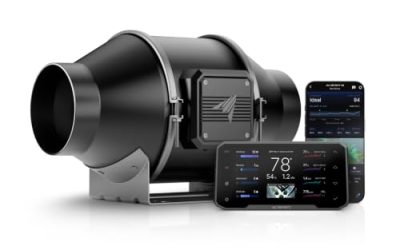
| AC Infinity CLOUDLINE PRO T6 | Timer and scheduling control without extra wall hardware | Controller 69 PRO included, with timer, cycle and schedule modes |
How to Choose
Size the airflow to the room, then add margin for the duct run. The common rule of thumb is roughly 1 CFM per square foot of bathroom floor. A remote fan loses some output to every foot of duct and every elbow between the grille and the fan, so a long or bendy run argues for stepping up one size rather than matching the bare minimum. The ratings below are quoted at real static pressure, not free air, which is the honest basis for comparison.
Understand what a sone rating can and cannot tell you. Sones measure perceived loudness at the grille. Panasonic publishes an HVI sone figure for the WhisperLine, which makes it the easiest pick to compare against ceiling fans. Fantech takes a different position with its Premium Bath line: it publishes no sone rating at all, on the logic that the motor sits remote from the room and grille noise depends on your duct layout. AC Infinity rates its fan in decibels instead. Treat these numbers as different languages rather than one league table.
Decide where the timer will live. There are three routes. A fan kit with no timer in the box can still run on one if you wire it through a countdown timer switch on the wall. A bare inline fan paired with a smart controller gets timer, cycle and schedule modes in software. A basic switch with no timer means the fan stops when you leave, which wastes the main benefit of the setup. Plan the control before you buy the fan, because retrofitting a timer switch later means opening the wall box again.
Match the duct diameter to the fan, not the other way round. The smaller kits here use 4-inch duct, the dual-grille Fantech steps up to a 6-inch trunk with 4-inch branches, and the AC Infinity uses 6-inch throughout. Reusing undersized existing duct chokes airflow and adds noise, so measure what is in the attic before ordering.
Count the grilles your layout really needs. A single grille over the shower covers most bathrooms. A long primary bath with a separate water closet, or two small bathrooms back to back, is where a dual-grille kit or a multi-inlet fan earns its keep: one motor, one roof or wall exit, and balanced pull from both points.
Best Options
Fantech PB110 Premium Bath Fan Kit
The PB110 is the reference design for this category: a remote centrifugal fan in a galvanized steel housing, a 7-inch ceiling grille, and a grille housing with a backdraft damper, all in one box. The fan mounts in the attic on its bracket, the grille is the only part visible in the bathroom, and the kit is listed for wet locations over a tub or shower when wired to a GFCI-protected circuit.
At 110 CFM on 4-inch duct it covers a standard full bathroom with headroom to spare, and it draws little power doing it. Fantech publishes no sone rating for this fan, so judge it on layout: with the motor several feet away and a short, smooth duct run, grille noise is minimal. The timer story needs honesty: there is no timer in the box. Fantech sells its FD60EM 60-minute electronic timer as the matched accessory, and any standard countdown timer switch does the same job.
Specs
- Airflow 110 CFM at 0.2 in. static pressure (HVI certified); duct size 4 inch; sones: no rating published by the maker, because the motor mounts remote from the grille; power 120V, about 21 W; housing galvanized steel; includes remote fan with mounting bracket, one 7-inch ceiling grille and grille housing with backdraft damper; single speed; HVI certified and UL listed for wet locations
Best for: A single standard bathroom where quiet is the whole point of the project
Watch out for: No timer is included, so budget for a countdown timer switch or the Fantech FD60EM accessory; single speed only, with speed control a separate add-on
Panasonic WhisperLine FV-10NLF1E
The WhisperLine is the bare-fan alternative to a kit: a remote-mount inline fan with a galvanized steel housing and a large sirocco blower wheel that turns slowly for its airflow, which is how it earns a published 1.0 sone rating at 120 CFM. That number is the lowest verified figure in this guide and makes the FV-10NLF1E the pick when you want noise performance in writing rather than implied.
The fan body accepts single or multiple inlets, so one unit can pull from a shower and a water closet through Panasonic’s inlet kits, which are sold separately with their own grilles and dampers. The totally enclosed condenser motor is built for continuous duty, and the housing can be mounted in several positions between joists or trusses. As with the Fantech kits, there is no timer inside the fan: Panasonic’s WhisperControl countdown timer switches are the intended wall control and are sold separately.
Specs
- Airflow 120 CFM at 0.2 in. static pressure; noise 1.0 sone at 0.2 in. static pressure; duct size 4 inch; power 120V, 36 W; totally enclosed condenser motor with thermal fuse protection; galvanized steel housing; sirocco blower wheel; supports single or multiple inlets with separate installation kits; grille not included
Best for: Buyers who want a verified sone rating and the option to ventilate several points with one fan
Watch out for: The fan is sold on its own, so grilles, dampers and inlet kits are separate purchases; no timer is built in, so add a countdown timer switch such as a Panasonic WhisperControl model
Fantech PB270-2 Premium Bath Fan Kit
The PB270-2 applies the PB110 formula at larger scale. One remote fan rated at 270 CFM feeds two ceiling grilles through a Y-adapter, with 6-inch duct on the fan side and 4-inch branches to each grille. That layout suits an oversized primary bathroom with moisture sources at opposite ends, and it works just as well across two smaller bathrooms that share a wall, with one motor and one exterior exit serving both.
Both grille housings include backdraft dampers, and the fan is listed for wet locations. The trade-offs mirror the smaller kit: Fantech publishes no sone rating, and there is no timer in the box. One switching detail deserves attention before you plan the wiring: both grilles always draw together, because there is a single fan. Separate wall switches can be wired per room, but the fan runs both branches whenever either calls.
Specs
- Airflow 270 CFM (260 CFM at 0.2 in. static pressure, HVI certified); duct size 6 inch at the fan with 4-inch grille branches; sones: no rating published by the maker, because the motor mounts remote from the grilles; power 120V; housing galvanized steel; includes remote fan with mounting bracket, two ceiling grilles, two grille housings with dampers and a Y-adapter (4 x 4 x 6); single speed; UL listed for wet locations
Best for: Large primary bathrooms, or two bathrooms ventilated by one remote fan
Watch out for: No timer is included, so plan a countdown timer switch on the wall circuit; both grilles exhaust together on the single fan, with no way to pull from one branch only
AC Infinity CLOUDLINE PRO T6
The CLOUDLINE PRO T6 takes the opposite approach to the pro kits: it is a general-purpose inline duct fan, and the timer is the headline. The included Controller 69 PRO offers timer, cycle and schedule modes alongside temperature and humidity triggers, plus app control over WiFi. For a bathroom, that means a genuine run-on routine: set a cycle or schedule that keeps air moving after showers, with no extra wall switch to buy or wire.
The EC motor delivers 402 CFM on 6-inch duct and is rated at 32 dBA, a decibel figure rather than a sone rating, so it cannot be lined up directly against the Panasonic’s 1.0 sone. What you give up versus the bath kits is the bathroom-specific hardware: there is no ceiling grille, no damper housing and no wet-location bath kit in the box, so you supply the grille and duct fittings yourself, and the fan belongs in a dry attic or duct space rather than inside the shower enclosure’s wet zone.
Specs
- Airflow 402 CFM; noise 32 dBA (the maker rates in decibels and publishes no sone figure); duct size 6 inch; EC motor with dual ball bearings; Controller 69 PRO included with timer, cycle and schedule modes, temperature and humidity triggers and WiFi app control; mixed-flow impeller; mounting hardware and duct clamps included; no grille or backdraft damper included
Best for: Anyone who wants the timer and scheduling built into the system rather than added at the wall
Watch out for: This is an inline duct fan, not a bath-specific kit, so grilles, dampers and duct are separate purchases; noise is quoted in dBA, not sones, so compare it on layout and motor distance rather than against sone figures
Which One Fits
For one standard bathroom and the simplest install, take the Fantech PB110: everything but the timer switch is in the box. If a verified low sone figure matters more than an all-in-one kit, or you want inlets over both the shower and the toilet, the Panasonic WhisperLine is the stronger engineering choice, at the cost of buying grilles and kits separately. For a big primary bath or a pair of bathrooms, the PB270-2 is the only pick here designed around two grilles on one fan. And if the timer is the feature you care about most, the CLOUDLINE PRO T6 is the one system in this guide that includes full timer, cycle and schedule control in the purchase.
Common Mistakes
Buying the fan and forgetting the control. A remote system on a plain switch loses steam the moment someone leaves the room. Decide on the countdown timer switch or smart controller at the same time as the fan.
Undersizing the duct to match what is already there. Forcing a 270 or 402 CFM fan through old 4-inch duct wastes airflow and adds the very noise the remote layout was meant to remove.
Mounting the fan too close to the grille. The quiet comes from distance and duct. A remote fan installed a foot from the ceiling grille behaves like a ceiling fan with extra steps.
Skipping the backdraft damper. Without a damper at the grille housing or in the run, outside air and attic smells drift back into the bathroom whenever the fan is off.
Expecting one grille to serve a divided bathroom. Steam is produced at the shower. If the only inlet sits over the toilet in a large or split bath, moisture lingers where it is made; that is the case the dual-grille and multi-inlet systems exist for.
FAQ
How long should a bathroom fan run after a shower?
A common guideline is about 20 minutes after the shower ends, long enough for mirrors to clear and surfaces to dry. That is exactly what a countdown timer or a controller cycle mode automates, so the fan finishes the job without anyone returning to switch it off.
Can one remote fan really ventilate two bathrooms?
Yes, with the right layout. A dual-grille kit such as the PB270-2, or a multi-inlet fan such as the WhisperLine, pulls from two points through a shared duct and one exterior exit. Both spaces draw whenever the fan runs, so plan the switching with that in mind.
Are sones or decibels the better noise measure?
They measure differently and do not convert cleanly. Sones, published by Panasonic for the WhisperLine, describe perceived loudness at the grille. Fantech publishes no sone figure for its remote kits, and AC Infinity quotes decibels. In every case, distance between the motor and the room plus smooth ductwork matters more than small differences in the printed number.
Do these systems need a special switch?
No proprietary switch is required. The fan kits wire to ordinary wall controls, and a countdown timer switch is the standard way to add timed run-on. The CLOUDLINE PRO T6 is the exception in this guide: its timer lives in the included controller and app instead of on the wall.
Final Verdict
Remote motor systems are the quietest honest answer to bathroom moisture, and the four picks here split cleanly by project. The Fantech PB110 is the default for a single bath, the Panasonic WhisperLine adds a verified 1.0 sone rating and multi-inlet flexibility, the Fantech PB270-2 covers two grilles with one motor, and the AC Infinity CLOUDLINE PRO T6 is the choice when built-in timer and schedule control outranks bath-specific hardware. Whichever route you take, pair the fan with timed control from day one: a fan that keeps running after the shower is the entire point of the upgrade.