Key takeaways
- Compare the best outdoor bird seed storage containers, from locking galvanized cans to a pour-spout dispenser that keeps seed dry and pest-free.
Disclosure: As an Amazon Associate, we earn from qualifying purchases. When you buy through links in this article, we may earn a commission at no extra cost to you.
Bird seed stored outdoors faces three enemies: moisture, insects, and animals. Rain turns a paper sack soggy, moths and weevils find open bags, and squirrels, raccoons, and rodents chew thin plastic or pry off loose lids. A good container answers all three with a strong body, a tight or locking lid, and a size matching how much seed you buy.
This guide compares four containers whose listings clearly market them for bird seed or seed and feed storage. Two are galvanized steel cans with locking lids, one is a purpose-built galvanized seed bucket with a scoop, and one is a smaller plastic dispenser designed for pouring. They suit different porches, sheds, and feeding routines, so read the capacity notes carefully before you choose.
Quick picks
- Best small steel can: Behrens 6106K 6-Gallon Galvanized Steel Can with Locking Lid, for about one modest bag of seed kept on a porch or in a shed.
- Best larger steel can: Behrens 6210 10-Gallon Galvanized Steel Can, for households that buy bigger bags and need rodent-resistant storage.
- Best purpose-built seed bucket: Audubon Woodlink Galvanized Steel Bird Seed Storage Bucket with Scoop, holding up to 16.5 quarts or 25 pounds, with locking tabs and a side-pocket scoop.
- Best pour dispenser: Buddeez 8-Quart Bird Seed Storage Container and Dispenser, for small, frequent feeder refills from a sheltered spot.
What makes a container suitable for outdoor use?
Material comes first. Galvanized steel cannot be chewed through by rodents, resists rust better than plain steel, and does not crack in cold weather the way some plastics can. That is why steel cans dominate this guide. Plastic still has a place for a small dispenser kept under cover, where easy pouring matters more than resisting a determined raccoon, but a plastic bin left fully exposed needs a much stronger lid and latch than most offer.
The lid is the second test. Look for a tight-fitting lid at minimum, and a locking lid if squirrels or raccoons visit your yard. A locking handle or locking tabs keep the lid on if the container is knocked over and stop clever paws from lifting it. No home container lid should be described as a perfect airtight seal unless the listing says so; galvanized cans keep rain and animals out well, but in very humid climates you should still store them under a roof and use seed in sensible rotation.
Capacity is the third test, and it is where buyers most often go wrong. Seed is bulky. A 6-gallon can suits roughly a 15 to 20 pound supply in practice, a 10-gallon can takes a larger bag, and a 25-pound bucket matches the common mid-size bag exactly. Buy a container for the bag you normally purchase, not the biggest bag on sale, because a half-empty oversized can is awkward to move and a too-small can leaves the rest of the bag exposed in the garage.
Finally, think about handling. A scoop stored with the container, a pour spout, a strong handle, and a weight you can lift when full all decide whether filling feeders is a two-minute job or a spill on the porch. Specifications below come from the product listings, not from practical use, so confirm dimensions and included parts on the current listing before ordering.
1. Behrens 6106K 6-Gallon Galvanized Steel Can with Locking Lid
Best for: Porches, balconies, and small sheds where one modest supply of seed needs real pest protection.
The Behrens 6106K is a classic galvanized steel storage can, and its listing details explain why this format has lasted so long. The can holds 6 gallons, is made of galvanized steel, and uses a locking lid with a wire handle that locks the cover on. The listing describes corrugated and swedged sides for strength and a wire-reinforced rim, details that help a thin steel can keep its shape through years of lifting and stacking.
Behrens markets these locking-lid cans for dry storage, including dry pet and livestock food and bird feed and seed, and describes them as rodent, rust, and odor resistant, with an offset bottom that keeps the can off the ground. That offset matters outdoors: a can sitting in a puddle or on damp concrete will suffer, while a raised base reduces direct contact with standing moisture. The listing also notes the cans are made in the USA, in Winona, Minnesota, and are fully recyclable.
In practical terms, 6 gallons is the right size for a household that buys a smaller bag of sunflower seed or mixed seed and feeds a few feeders. The can is light enough to carry to the feeder station when part full, and small enough to tuck beside a porch door or on a shed shelf. The locking lid is the headline feature: lift and position the handle correctly and the lid stays put, which is exactly what you want when raccoons pass through at night.
There are limits to respect. This is a dry-storage can, not a waterproof drum. Keep it under a porch roof, in a shed, or against a sheltered wall rather than out in open rain, and do not expect a gasket seal, because the listing does not claim one. In a humid climate, use older seed first and check the contents if the can has sat unused through a wet season. Steel also dents if dropped onto concrete, though a dent is cosmetic for most owners and does not open the can to pests the way a cracked plastic bin would.
Choose the 6-gallon Behrens if you want the smallest steel step up from a bag, with a locking lid and no plastic for rodents to chew. It is a simple, proven answer to the most common outdoor seed problem: animals getting in.
2. Behrens 6210 10-Gallon Galvanized Steel Can
Best for: Bigger seed bags and busier feeding stations that need more steel capacity.
The Behrens 6210 steps the same galvanized steel idea up to 10 gallons. Its Amazon listing describes a 10-gallon can from Behrens Manufacturing, made of alloy steel, with a lid, a cylindrical shape, a polished finish, and a weather-resistant special feature. The model number is listed as 6210, and the size is listed as 10-gallon. Where the 6-gallon can suits a modest bag, this size suits households that buy seed in larger quantities or keep two seed types in rotation and want one sturdy home for the main supply.
The case for the larger can is mostly about fewer compromises. A big bag that must be folded, clipped, and left beside a small container is a bag that spills and attracts mice. A 10-gallon steel can lets you decant the whole purchase, close the lid, and keep the feeding area tidy. Steel walls stop chewing, the lid keeps curious animals and rain off the top, and the can wipes clean in a way a fabric or cardboard store never will.
Placement matters more at this size. A full 10-gallon can of seed is heavy, so treat it as a stationary store: choose a sheltered, level spot near where you fill feeders, ideally under a roof in a shed, garage, or covered porch, and scoop from the can rather than carrying it around. Use a dedicated scoop, keep the lid closed between refills, and lift with the handle and a straight back when you do need to move it, preferably after some seed has been used.
Be clear about what this model is. The 6210 listing presents a lidded galvanized trash and utility style can rather than a seed-specific bucket with a scoop, so you supply your own scoop and you should confirm the lid fit and handle style on the current listing. Owners commonly use this exact format for feed and seed storage because the material and lid do the important work, but it does not add seed-specific extras. If you want those extras, the Woodlink bucket below is the purpose-built alternative.
Choose the 10-gallon Behrens if capacity and steel construction are your priorities and your storage spot is sheltered. It is the bulk option in this guide, and for a yard with many feeders, bulk done properly beats a torn bag every time.
3. Audubon Woodlink Galvanized Steel Bird Seed Storage Bucket with Scoop
Best for: Bird feeders who want a container designed for seed from the start, scoop included.
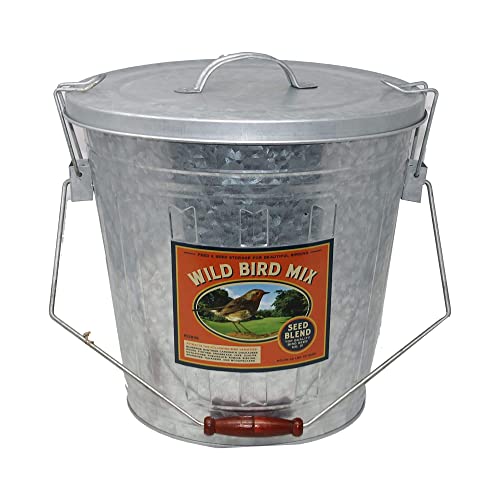
The Woodlink bucket, model 25253 in the listing details, is the most purpose-built pick here. Its listing describes a galvanized metal bucket for storing and transporting bird seed, holding up to 16.5 quarts or 25 pounds of seed, with dimensions of 14 by 14 by 13 inches and a weight of 4.7 pounds. That capacity matches a standard 25-pound bag, which removes the leftover-bag problem entirely for many buyers.
Three features separate it from a plain can. First, the locking lid: the listing describes locking tabs on the sides that keep the lid closed to prevent spills and keep out curious critters. Second, the scoop: an integrated side pocket holds the included scoop, so the tool you need is always with the seed rather than lost in the shed. Third, the look: varied gray tones and a hammered, rustic farmhouse appearance mean the bucket can sit on a porch without looking like a trash can, which matters in a small outdoor space where storage is always on show.
Galvanized metal gives the same core protection as the Behrens cans: rodents cannot chew through it, and the body shrugs off knocks that would crack thin plastic. The bucket shape, wider than it is tall, is stable on a porch floor and easy to scoop from without tipping. At 4.7 pounds empty, it is also easy to position before you fill it; once full with 25 pounds of seed, carry it with care or, better, fill it where it will live.
Note the honest limits reported around this style of bucket. A scoop kept in an outdoor side pocket can weather faster than the bucket itself, so store the whole bucket under cover. The locking tabs need to be engaged properly to do their job; a lid resting loosely on top protects against rain but not against a determined raccoon. And as with all galvanized storage, this is weather resistance, not a promise that seed left for months in humid air will stay perfect. Rotate stock and keep the bucket sheltered.
Choose the Woodlink if you buy 25-pound bags, fill feeders often, and value the included scoop and seed-specific design. For many backyard bird feeders, this is the most convenient outdoor store in the guide.
4. Buddeez 8-Quart Bird Seed Storage Container and Dispenser
Best for: Small, frequent refills from a sheltered porch, garage, or utility room.
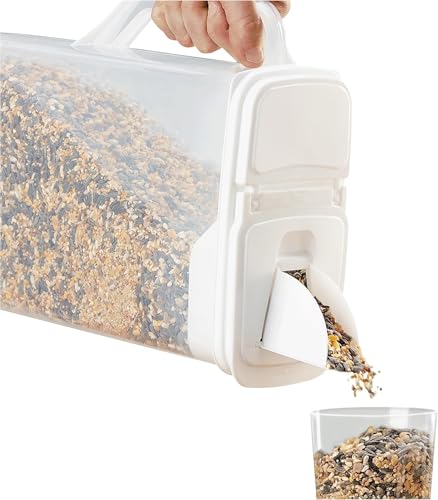
Not every feeder needs a steel can. The Buddeez container takes the opposite approach: a smaller plastic dispenser built around pouring. Its listing describes an 8-quart capacity container for pet food and bird seed, with a durable EZ Grip handle, an extra-wide flip lid, and a pour spout. The included component is listed as an 8-quart dispenser for pet food and bird seed, the model number is 00506W-BAG, and the listing notes a bag-in storage option, meaning seed can be kept inside its original bag within the container if you prefer.
That design solves a real daily problem. Scooping from a deep can and carrying seed across a yard spills more seed than most people admit, and spilled seed on the ground attracts exactly the animals you are trying to keep out of storage. A handled dispenser with a spout lets you take the container to the feeder and pour directly, or fill a small scoop through the wide flip lid. For one or two feeders refilled every few days, 8 quarts is a sensible working quantity, especially paired with a larger steel can as the main store.
The material is the trade-off, and this guide will not hide it. The listing describes a plastic container, and plastic cannot match galvanized steel against rodents. Keep the Buddeez under cover, indoors, or inside a shed or garage, rather than standing alone on an open porch where raccoons work at night. In that sheltered role, its lid, handle, and spout make it the easiest container here to use, and its smaller size suits apartments, balconies with enclosed storage, and anyone who cannot lift a full steel can.
Think of the Buddeez as the dispensing half of a two-part system that many experienced bird feeders use: bulk seed lives in a locking steel can, and a week or so of seed lives in the Buddeez for clean, quick refills. Used that way, you get steel protection and plastic convenience without asking either material to do a job it is bad at.
Choose the Buddeez if pouring control and light weight matter most and you have a sheltered place to keep it. Do not choose it as your only outdoor store in an area with active raccoons or rats; that job belongs to steel.
How to store bird seed outdoors, whatever you buy
First, keep the container under a roof. Even galvanized steel lasts longer and seed keeps better when direct rain is off the lid. A shed, garage, covered porch, or sheltered corner beats open ground every time. Raise the container slightly off damp concrete if you can, and keep it away from walls where rodents travel.
Second, decant carefully and close the lid every time. Wipe seed dust off the rim so the lid seats properly, engage any locking handle or tabs, and sweep up spills, because spilled seed is an invitation to pests.
Third, rotate your stock. Use older seed first, do not top up fresh seed over old seed that has sat for months, and discard seed that smells musty, looks mouldy, or has webbing from insects. Clean an empty container with hot soapy water, dry it fully, and only then refill it. A dry interior matters as much as a good lid.
Finally, match the system to your wildlife. Where squirrels, raccoons, or rats are regulars, steel with a locking lid is the baseline, not an upgrade.
Verdict
For most readers, the Audubon Woodlink bucket is the best outdoor bird seed storage container here, because it was designed for seed: 25-pound capacity, locking tabs, galvanized body, and a scoop that lives in its own side pocket. For a smaller, classic steel store, choose the Behrens 6106K 6-gallon locking-lid can; for bulk, choose the Behrens 6210 10-gallon can and add your own scoop. Add the Buddeez 8-quart dispenser if you want clean pouring for daily refills from a sheltered spot. Whichever you pick, keep it covered, keep it locked, and keep the seed moving, and your feeders will stay stocked with dry, clean seed all season.