Our Short List of 3
All 4 Picks at a Glance
| Product | Specs | Action |
|---|---|---|
 Garmin Bike Cadence Sensor | Check price on Amazon | |
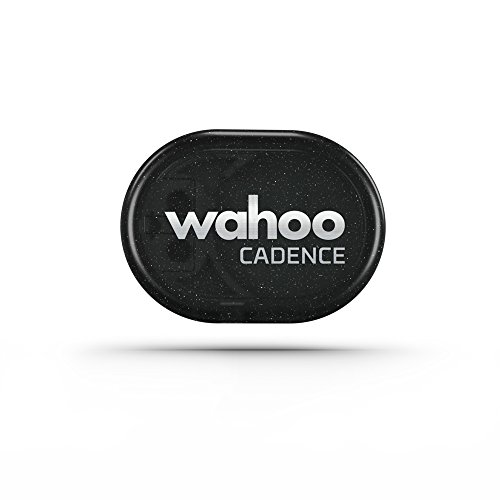 Wahoo RPM Cycling Cadence Sensor | Check price on Amazon | |
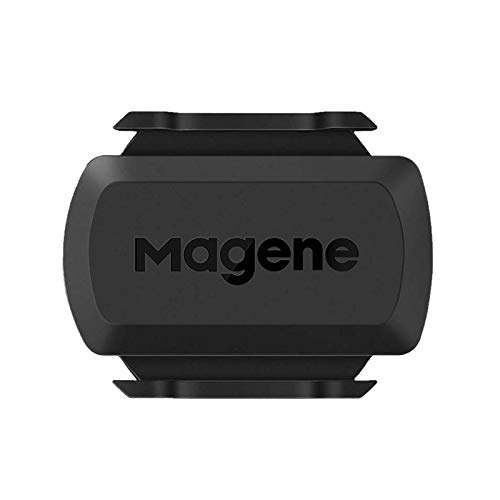 Magene S3+ Outdoor/Indoor Speed/Cadence Sensor | Check price on Amazon | |
 iGPSPORT Cadence Sensor CAD70 | Check price on Amazon |
Key takeaways
- Four verified bike cadence sensors compared by mounting, wireless connection, compatibility and indoor and outdoor use.
Disclosure: As an Amazon Associate, we earn from qualifying purchases.
Our top pick: Garmin Bike Cadence Sensor. Runner-up: Wahoo RPM Cycling Cadence Sensor.
A bike cadence sensor does one simple job, constantly while you ride: it counts how many times your pedals turn in a minute. That number, shown as revolutions per minute on a bike computer, watch or phone app, tells you whether you are grinding slowly in a hard gear, spinning comfortably in an easier one, or letting your rhythm drift as fatigue builds. Speed alone cannot tell you that story, because the same speed can come from very different pedalling styles depending on wind, gradient and gear choice. Cadence gives you the missing half of the picture, and once you start watching it, pacing climbs and structuring indoor sessions become easier to judge.
The four sensors in this guide are all crank-arm or shoe-mounted cadence sensors checked against real Amazon US listings with verified ASINs. Three are dedicated cadence sensors, and one, the Magene S3+, is a dual-mode sensor that works as either a speed or a cadence sensor depending on how it is set up, presented honestly in that role throughout. No speed and cadence bundles were used as substitutes for standalone sensors. Between them, the four cover the main ways riders use cadence: with a Garmin head unit outdoors, shared between road and indoor bikes, switched between speed and cadence duty, and matched with computers and watches from several brands.
Choosing between them is a question of fit and connection: a sensor that mounts securely, speaks the wireless language your computer or app understands, and stays put through rain and vibration. The sections below walk through each sensor, then explain mounting and wireless standards.
Quick Picks
- Garmin Bike Cadence Sensor — Best overall pick: fastens to any size crank arm and measures pedal strokes per minute, at just 1.6 ounces.
- Wahoo RPM Cycling Cadence Sensor — Best for mixed indoor and outdoor riding: listed for outdoor, spin and stationary bikes, with both crank and shoe mounting options in the box.
- Magene S3+ Outdoor/Indoor Speed/Cadence Sensor — Best flexible pick: a dual-mode, magnet-free sensor that can be set to cadence mode, with Bluetooth 4.0 and ANT+ connection.
- iGPSPORT Cadence Sensor CAD70 — Best for cross-brand setups: a cadence sensor for cycling computers and smartwatches, with Bluetooth and ANT+ compatibility and stated support across several ecosystems.
Garmin Bike Cadence Sensor
OUR TOP PICK
The Garmin Bike Cadence Sensor is the most straightforward recommendation in this guide, and the one most riders should look at first. As stated on the listing, it fastens to any size crank arm and measures pedal strokes per minute, with no magnets to align and no frame hardware to fit. That matters: older magnet-based designs depended on careful alignment, and a small knock could stop the readings. A self-contained unit on the crank removes that problem, and it is easy to move when you change bikes or swap cranks.
The listing gives the item weight as 1.6 ounces, so once fitted you will not notice it. The sensor is identified by model number 010-12102-00, and it belongs to Garmin’s ANT+ generation of wireless sensors, so it pairs naturally with Garmin head units and watches that receive ANT+ signals. If your training already revolves around a Garmin computer, this sensor drops into that setup with the least thought required.
In use, the value of a sensor like this is consistency. Cadence data is only useful if it is recorded the same way on every ride, so you can compare a loop this week with the same loop a month later and trust the change reflects your riding. A secure crank fit supports that, and steady cadence targets during endurance or climbing work depend on a feed that does not drop out mid-session.
There are limits worth stating plainly. This is a cadence-only sensor, so speed and distance come from your head unit’s GPS or a separate speed sensor. The listing describes a wireless ANT+ generation sensor, so riders whose only receiving device is a Bluetooth phone app should confirm compatibility first; the cross-brand options below may suit them better. Within its intended ecosystem, though, it remains the cleanest, simplest pick here.
Specs
– Model: 010-12102-00
– Sensor type: Cadence sensor, as stated on the listing
– Mounting: Fastens to any size crank arm, as stated on the listing
– Measurement: Pedal strokes per minute, as stated on the listing
– Item weight: 1.6 ounces, as stated on the listing
Pros
– Fastens to any size crank arm, with no magnets to align
– Measures pedal strokes per minute in a light 1.6-ounce unit
– A natural match for Garmin head units and watches using ANT+
Cons
– Cadence only, so it does not provide speed on its own
– Buyers who rely on Bluetooth-only phone apps should confirm compatibility first
Wahoo RPM Cycling Cadence Sensor
The Wahoo RPM Cycling Cadence Sensor is the runner-up, and for riders who split their time between the road and an indoor bike it may be the better personal choice. The listing, from Wahoo Fitness under part number WFPODCAD2, describes it as suitable for outdoor, spin and stationary bikes. Cadence is arguably even more valuable indoors, because a stationary session has no wind or gradient to organise your effort; the numbers on the screen are the structure of the workout.
What you get in the box supports that flexibility. As stated on the listing, the package includes the sensor, a CR2032 battery already installed, a rubber mounting option, zip ties, a shoe mount option and 3M double-sided tape. The shoe mount solves a problem crank mounting cannot: on a gym spin bike or a borrowed bike, you cannot always attach hardware to the crank. A sensor on your shoe travels from bike to bike, keeping your recording consistent even when the bike changes — a genuine advantage for riders who train at home, ride outdoors at the weekend, or use hotel gym bikes.
The rubber mount and zip ties cover conventional crank-arm fitting on your own bike, and having tape as well means you can choose the fitting that suits your crank shape. Because the battery is installed from the start, setup is mainly mounting the sensor, waking it by turning the pedals, and pairing it before you ride.
The trade-offs are modest. A shoe-mounted sensor is one more item to remember, and a sensor moved between bikes needs more care than one living on a single crank arm. Riders with one bike may prefer the set-and-forget Garmin; riders with several contexts will find the Wahoo the most adaptable sensor here.
Specs
– Brand: Wahoo Fitness, as stated on the listing
– Part number: WFPODCAD2
– Use: Outdoor, spin and stationary bikes, as stated on the listing
– Included: RPM cadence sensor, CR2032 battery installed, rubber mounting option, zip ties, shoe mount option and 3M double-sided tape, as stated on the listing
Pros
– Listed for outdoor, spin and stationary bikes, so one sensor covers home and road riding
– Shoe mount option lets you record cadence on gym or borrowed bikes
– Battery installed and several mounting options included in the box
Cons
– A sensor moved between shoe and crank is easier to misplace than a permanently fitted one
– Riders with a single bike may not need its extra mounting variety
Magene S3+ Outdoor/Indoor Speed/Cadence Sensor
The Magene S3+ is the most flexible sensor in this guide, and it needs the clearest explanation, because it is not a cadence-only unit. As stated in the product information, it is a dual-mode speed or cadence sensor: one sensor that works in one mode at a time, with the mode switched by reinserting the battery. A red LED indicates cadence mode and a green LED indicates speed mode. Buy it either as your cadence sensor, set to cadence mode, or as your speed sensor; a single unit cannot do both jobs at once, and a rider wanting speed and cadence together would need two units. Understood on those terms, it is a clever piece of kit.
Its connection options are broad. The S3+ supports Bluetooth 4.0 and ANT+, and the product information lists compatibility with Zwift, Wahoo Fitness, Onelap and Garmin devices, so it suits riders who record outdoors on a computer and indoors in an app. It is a geomagnetic, magnet-free design, so there is nothing to align; fitting is attaching the small unit and pairing it.
It weighs 9 grams and measures 38.3 by 29.8 by 8.4 millimetres, so it sits neatly on a crank arm in cadence mode. It runs on a CR2032 battery with approximately 500 hours stated, and an IP66 rating is also stated, suiting it to poor weather outdoors and sweaty sessions indoors.
The main consideration is mode switching itself. Swapping one unit between speed duty one day and cadence duty the next is possible but fiddly, and most owners will choose one role and leave the sensor in it. Check the LED colour after a battery change to be sure it woke in the intended mode. For a rider who sets the red LED cadence mode once and then enjoys wide compatibility from a very light sensor, the S3+ is an appealing and honest choice.
Specs
– Model: Magene S3+, dual-mode speed or cadence sensor, one mode at a time
– Mode switching: By reinserting the battery; red LED for cadence mode, green LED for speed mode
– Wireless: Bluetooth 4.0 and ANT+
– Design: Geomagnetic, magnet-free
– Battery: CR2032, approximately 500 hours as stated in the product information
– Rating: IP66, as stated in the product information
– Weight: 9 g
– Dimensions: 38.3 x 29.8 x 8.4 mm
– Compatibility: Zwift, Wahoo Fitness, Onelap and Garmin devices, as stated in the product information
Pros
– Can be set to cadence mode or speed mode, so one design covers either role
– Bluetooth 4.0 and ANT+ for wide device and app compatibility
– Very light at 9 g, magnet-free, with an IP66 rating stated
Cons
– One unit works in only one mode at a time, so speed and cadence together require two units
– Mode is switched by reinserting the battery, which is fiddly if done often
iGPSPORT Cadence Sensor CAD70
The iGPSPORT Cadence Sensor CAD70 rounds out this guide as the cross-brand option. The listing identifies it as model CAD70, part number AC61, and describes it as a cadence sensor for cycling computers and smartwatches. That pairing matters, because many riders now record rides on a wrist watch as often as on a bar-mounted computer, and a sensor that feeds both fits that habit. Rather than tying you to a single head unit, it treats cadence as a data stream whichever device you are wearing or mounting that day can receive.
Compatibility is the second reason it earns its place. The listing states compatibility with Garmin, Bryton, Polar and Wahoo ecosystems, and states Bluetooth and ANT+ compatibility. That makes the CAD70 a sensible choice for riders whose electronics come from more than one maker: a Garmin computer on one bike, a Bryton on another, a Polar watch for other training. It is also a reasonable first sensor for someone who has not yet settled on a head unit brand, since a sensor speaking both Bluetooth and ANT+ is less likely to be stranded when a dedicated computer replaces a watch or phone later.
The honest caveat is that the listing checked records fewer physical specifications for the CAD70 than for the Magene above, so buyers wanting every dimension confirmed should read the current listing before ordering. What is stated is clear: a dedicated cadence sensor, model CAD70, for computers and smartwatches, with Bluetooth and ANT+ across those four ecosystems.
Specs
– Model: CAD70, as stated on the listing
– Part number: AC61, as stated on the listing
– Sensor type: Cadence sensor for cycling computers and smartwatches, as stated on the listing
– Wireless: Bluetooth and ANT+ compatibility, as stated on the listing
– Compatibility: Garmin, Bryton, Polar and Wahoo ecosystems, as stated on the listing
Pros
– Bluetooth and ANT+ compatibility stated on the listing
– Stated compatibility across Garmin, Bryton, Polar and Wahoo ecosystems
– Suits recording on either a cycling computer or a smartwatch
Cons
– The listing checked records fewer detailed physical specifications than some rivals here
– Riders fully committed to one brand may prefer that brand’s own sensor
How to Choose
Start with the device that will receive the signal, because a sensor is only useful if your computer, watch or app can hear it. The two wireless languages here are ANT+ and Bluetooth: ANT+ is the long-standing standard for cycling head units, while Bluetooth is what phones and many apps listen for. The Garmin belongs to the ANT+ generation, while the Magene S3+ and iGPSPORT CAD70 state both. Checking your device’s specification before you order prevents the one disappointment no mounting trick can fix: a sensor and a screen that cannot talk to each other.
Next, decide where the sensor will live. A crank-arm sensor like the Garmin is the fit-and-forget option for your own bike. A shoe mount option, like the Wahoo RPM’s, adds cadence recording on spin bikes and other people’s bikes, which matters if much of your training happens away from your own machine.
Then be clear about whether you want cadence alone or speed as well. Dedicated cadence sensors report pedalling rate only, and outdoors that is usually enough, because GPS supplies speed and distance. Indoors, GPS cannot help, so some riders add wheel speed sensing on a trainer. The Magene S3+ can fill either single role, but one unit does one job at a time; covering both at once means two units.
Battery and weather details are the final checks. The Wahoo arrives with its CR2032 installed and the Magene states approximately 500 hours from its CR2032, so battery changes are rare, but know which cell your sensor takes. For outdoor use, look for a stated weather rating such as the IP66 figure given for the Magene, and check the mount is still snug when you clean the bike.
Finally, think about what you will do with the numbers: a rhythm that collapses on climbs points to gearing or strength work, and a rhythm that drifts down late in long rides points to fatigue. The best choice is the sensor whose mounting and wireless fit your devices so well that it is simply always there, recording, ride after ride.
FAQs
Do I need a cadence sensor if my bike computer already shows speed?
Speed and cadence answer different questions. Speed changes with wind, gradient and surface even when your effort stays the same. Cadence tells you how fast your legs are turning, a direct reflection of how you are riding. Many riders find it the more useful training number, because holding a steady rhythm is a skill they can practise on any road, and a dedicated sensor is the only way to record it accurately; a computer cannot guess pedalling rate from GPS data.
Where does a cadence sensor fit, and is fitting difficult?
Most sensors here fit on the crank arm, and modern magnet-free designs have made fitting simple: the Garmin fastens to any size crank arm, and the Magene is a small magnet-free unit. The Wahoo adds a shoe mount option, suiting spin and stationary bikes where you cannot attach anything to the bike itself. There are no magnets to align, which was the fiddly part of older systems. After fitting, turn the pedals to wake the sensor and pair it before riding.
Can one sensor work with both my bike computer and my indoor training app?
It can, provided the wireless standards line up. Sensors supporting both Bluetooth and ANT+, such as the Magene S3+ and the iGPSPORT CAD70, can connect to ANT+ head units outdoors and Bluetooth-based apps indoors, though typically to one receiving device at a time during a ride. Check which standard your app requires, and pair the sensor in the app’s device settings before your first session.
Conclusion
For most riders, the Garmin Bike Cadence Sensor is the top pick: it fastens to any size crank arm, weighs 1.6 ounces, and measures pedal strokes per minute. The Wahoo RPM is the runner-up and the most adaptable option, with outdoor, spin and stationary use and a shoe mount that travels between bikes. The Magene S3+ is the flexible dual-mode choice, honestly understood as a sensor that does one job at a time, with Bluetooth 4.0, ANT+ and wide app compatibility. The iGPSPORT CAD70 suits riders whose computers and watches span several brands. Whichever you choose, confirm the wireless fit with your receiving device first, mount the sensor securely, and let the numbers settle into your training until steady pedalling becomes second nature.