Our Short List of 3
All 5 Picks at a Glance
| Product | Specs | Action |
|---|---|---|
 1. First Alert SM210 10-Year Battery Smoke Alarm | Check price on Amazon | |
 2. Kidde 20SD10 10-Year Battery Smoke Detector | Check price on Amazon | |
 3. Kidde 20SA10 Hardwired Smoke Detector, 3-Pack | Check price on Amazon | |
 4. X-Sense SC06 Smoke and Carbon Monoxide Alarm | Check price on Amazon | |
 5. First Alert SC5 Battery Smart Smoke and Carbon Monoxide Alarm | Check price on Amazon |
Key takeaways
- The best place for smoke detectors in every home: bedroom, hallway, and living-room placement plus the alarms to install at each spot, hardwired or battery.
Disclosure: As an Amazon Associate, this site may earn from qualifying purchases made through links on this page.
Intro
The best smoke detector in the world does nothing if it sits in the wrong room. Placement decides whether an alarm wakes you in time, and the rules are simpler than most people expect: an alarm inside every bedroom, one outside each sleeping area, one on every level of the home including the basement, and one in the living room or family room. Smoke rises, so alarms belong on the ceiling or high on a wall, close to the ceiling, where smoke reaches them first.
This guide answers the placement question room by room, then matches an alarm to each spot. A battery alarm suits a bedroom or hallway with no wiring, and a sealed 10-year battery means no battery changes for the life of the unit. A hardwired alarm suits a home that already has alarm wiring, and it links every alarm together so all of them sound at once. A combination alarm adds carbon monoxide detection in the same unit, which suits rooms near a furnace, a water heater, or an attached garage. A smart alarm adds phone alerts and voice warnings, which suits anyone who wants to know about danger while away from home.
The five alarms below cover those four jobs. Two are smoke-only alarms for bedrooms and hallways. One is a hardwired alarm for wired homes. Two are combination alarms that watch for smoke and carbon monoxide together, including the smart alarm that Google points Nest Protect owners toward now that the Nest Protect is discontinued. Every pick is sold on Amazon US, and each one is linked once, in The Picks.
At a Glance
- Best battery alarm for bedrooms: First Alert SM210 — slim profile, sealed 10-year battery, photoelectric sensing.
- Best battery alarm for hallways: Kidde 20SD10 — sealed 10-year battery, LED status lights, self-checking parts.
- Best hardwired alarm: Kidde 20SA10 — 120V wiring, sealed 10-year backup, links up to 24 Kidde alarms.
- Best combination alarm: X-Sense SC06 — smoke plus carbon monoxide, sealed 10-year battery, standalone.
- Best smart alarm: First Alert SC5 Battery — phone alerts, voice warnings, works with Nest Protect units.
How to Choose
Count the rooms first. The standard layout is an alarm inside every bedroom, one outside each sleeping area, one on every level including the basement, and one in the living room or family room. A large home needs more than one alarm per level, and a long hallway may need an alarm at each end. Walk the home with that layout in mind before you buy, and count how many units the plan needs. Multi-packs help here: the Kidde 20SA10 pick in this guide is listed as a 3-pack, which covers a small wired home in one box.
Ceiling or high on the wall. Smoke rises and spreads along the ceiling, so mount the alarm on the ceiling, ideally near the center of the room, or high on a wall close to the ceiling. Keep it away from the corner where a wall meets the ceiling, since smoke can miss that pocket. In a room with a pitched ceiling, mount within the upper part of the slope, not at the lowest edge.
Keep alarms away from nuisance sources. Kitchens, bathrooms, and garages cause most false alarms. Keep a smoke alarm at least 10 feet from a cooking appliance, so steam and cooking smoke do not set it off. Keep alarms out of bathrooms, where shower steam triggers them, and away from vents, fans, and windows, where moving air pushes smoke away from the sensor. Photoelectric sensing, which all five picks use, is less prone to cooking nuisance alarms than ionization sensing.
Battery or hardwired. A battery alarm mounts anywhere with screws and a bracket, which suits renters and older homes. A sealed 10-year battery removes battery changes for the life of the unit, and the alarm signals end-of-life when the decade is up. A hardwired alarm runs on house wiring with a sealed backup battery for outages, and it links to other alarms on the circuit so every unit sounds together. If the home already has alarm wiring, a hardwired pick is the better choice. If it does not, a battery pick is simpler and needs no electrician.
Smoke-only or smoke plus carbon monoxide. Carbon monoxide is a colorless, odorless gas from fuel-burning appliances, and it needs its own sensor. A combination alarm watches for both hazards in one unit, which suits rooms near a furnace, a water heater, a fireplace, or an attached garage. Bedrooms benefit from a combination alarm too, since carbon monoxide danger is highest while people sleep. The two combination picks in this guide cover that job.
Smart features for alerts away from home. A smart alarm sends phone alerts when it sounds, names the hazard and the room by voice, and links wirelessly with other smart alarms. That suits anyone who travels or wants to know about danger while out. The trade-off is setup through an app and a higher unit count for a whole house, since each room needs its own smart unit.
The Picks
1. First Alert SM210 10-Year Battery Smoke Alarm
The SM210 is the battery alarm to put inside a bedroom. It is a photoelectric alarm on a sealed 10-year lithium battery, so there is no battery to change and no low-battery chirp for the life of the unit. The slim profile stands about 1 inch deep, roughly half the depth of a standard alarm, so it sits discreetly on a bedroom ceiling. First Alert’s Precision Detection tuning aims to cut cooking nuisance alarms, and the alarm conforms to UL 217 10th edition.
The single button handles hush and silence, and an end-of-life warning signals when the decade is up and the unit needs replacing. It detects smoke only, so pair it with a combination alarm on the same level if carbon monoxide coverage matters in that part of the home. The SM210 is the named replacement for the discontinued First Alert P1210. Put this one inside bedrooms and in hallways where no wiring exists and a low profile matters.
2. Kidde 20SD10 10-Year Battery Smoke Detector
The 20SD10 is the battery alarm for hallways and living rooms, and it is the strongest single choice in Kidde’s current DETECT line for a home without alarm wiring. Photoelectric sensing on a sealed 10-year battery, an 85 dB alarm with a red LED warning light, and LED status indicators that show normal operation at a glance. The 5-inch body suits living rooms, hallways, kitchens at a distance, and bedrooms, and the alarm is listed to UL 217 9th edition.
Kidde’s enhanced sensing aims to cut false alarms from cooking, and the internal parts check themselves so the alarm keeps watch without attention. The end-of-life signal beeps when the 10 years are up. It detects smoke only, so a combination alarm belongs near fuel-burning appliances. Put this one in hallways outside sleeping areas and in living rooms, where its LED status lights make it easy to confirm the alarm is watching.
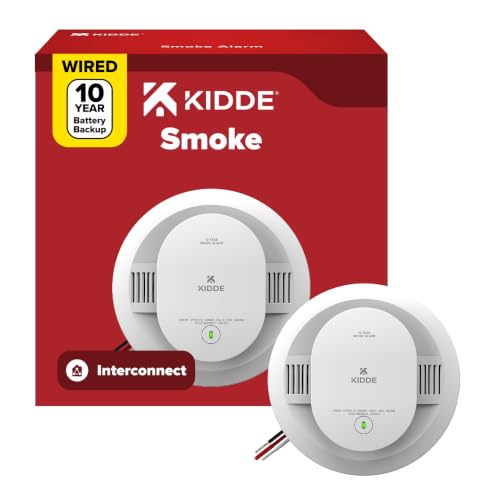
3. Kidde 20SA10 Hardwired Smoke Detector, 3-Pack
Kidde 20SA10 Hardwired Smoke Detector
The 20SA10 is the hardwired alarm for a home that already has alarm wiring, and this listing covers three alarms in one box. It runs on 120V house wiring with a sealed 10-year backup battery, so it keeps working through a power outage and never needs a 9-volt. Photoelectric sensing, an 85 dB alarm, LED status lights, and self-checking parts match the battery model, with one decisive addition: wired interconnection. When one alarm sounds, every linked Kidde alarm on the circuit sounds too, up to 24 devices, so a fire in the basement wakes the bedrooms upstairs.
The alarm also carries an alarm memory that shows whether it sensed smoke in the last 24 hours, and it is listed to UL 217. The 3-pack covers a small wired home in one purchase; larger homes need more than one pack. Note that the listing offers several pack sizes, so confirm the pack count on the product page before ordering. Put this one wherever wiring already exists, especially in hallways and on every level, and let the interconnection carry the warning through the whole house.
4. X-Sense SC06 Smoke and Carbon Monoxide Alarm
X-Sense SC06 Smoke and Carbon Monoxide Alarm
The SC06 is the combination alarm for rooms near fuel-burning appliances. One unit watches for smoke with a photoelectric sensor and for carbon monoxide with an electrochemical sensor, both listed to UL 217 and UL 2034, and it sounds an 85 dB alarm for either hazard. A sealed 10-year lithium battery powers it for the life of the unit, so there is no battery to change and no wiring to run.
The SC06 is a standalone unit: it does not link wirelessly to other alarms and it has no Wi-Fi, so each unit watches its own room. The 5.7-inch body mounts with a bracket, screws, and anchors, and the large mounting plate covers old screw holes from a previous alarm. This listing is for a single unit; a 5-pack exists under a separate listing for whole-home coverage. Put this one near a furnace, a water heater, a fireplace, or an attached garage, and in bedrooms where carbon monoxide coverage matters most.
5. First Alert SC5 Battery Smart Smoke and Carbon Monoxide Alarm
First Alert SC5 Smart Smoke and Carbon Monoxide Alarm
The SC5 Battery is the smart alarm for anyone replacing a discontinued Google Nest Protect, or for anyone who wants phone alerts from a smoke alarm. It is the alarm Google points Nest Protect owners toward: it fits the same ceiling mount, links into the same Google Home app, and interconnects wirelessly with other SC5 alarms and with Nest Protect units still in service, up to 18 alarms. Phone alerts arrive through the First Alert app and Google Home, voice warnings name the hazard and the room, and the alarm covers smoke with a photoelectric sensor and carbon monoxide with an electrochemical sensor.
Power comes from six replaceable CR123A batteries, and the unit carries a 10-year limited warranty and a listing to UL 217 10th edition. It works with Google Home only, with no Alexa, Apple HomeKit, SmartThings, or Matter support, and setup runs through the First Alert app before it links into Google Home. One caution on availability: at last check in November 2026, Amazon itself was not selling this model and the listing was held by a third-party seller, while First Alert’s own store showed it backordered, so confirm a new unit is actually in stock on the product page before ordering. Put this one in bedrooms and hallways in a Google-first smart home, especially where Nest Protect units are aging out.
Comparison Table
| Pick | Hazards | Power | Links to others | Standout |
|---|---|---|---|---|
| First Alert SM210 | Smoke | Sealed 10-year battery | No | Slim 1-inch profile |
| Kidde 20SD10 | Smoke | Sealed 10-year battery | No | LED status, self-checking |
| Kidde 20SA10, 3-pack | Smoke | Hardwired, sealed backup | Wired, up to 24 | Whole-house warning |
| X-Sense SC06 | Smoke + CO | Sealed 10-year battery | No | Combination, standalone |
| First Alert SC5 Battery | Smoke + CO | 6 CR123A batteries | Wireless, Nest Protect | Phone alerts, voice warnings |
Which One Fits Your Situation
Inside every bedroom: First Alert SM210. Slim, silent on batteries for a decade, and photoelectric sensing keeps nuisance alarms down.
Hallways and living rooms: Kidde 20SD10. LED status lights show it is watching, and the sealed battery means no maintenance visits to a hallway ceiling.
Home with alarm wiring: Kidde 20SA10 3-pack. Hardwired power plus interconnection means one alarm wakes the whole house, and the 3-pack covers a small home in one box.
Near a furnace, water heater, or garage: X-Sense SC06. Smoke plus carbon monoxide in one standalone unit, with no wiring to run.
Replacing Nest Protect, or wanting phone alerts: First Alert SC5 Battery. It fits the old mount, joins Google Home, and talks to the Nest Protect units still in service. Confirm a new unit is in stock before ordering.
Renters and older homes: Any battery pick here. The SM210, 20SD10, and SC06 mount with screws and a bracket and need no wiring at all.
FAQ
How many smoke detectors does a home need?
At minimum, one inside every bedroom, one outside each sleeping area, one on every level including the basement, and one in the living room. Larger homes and long hallways need more. Count the rooms against that layout before you buy.
Should a smoke detector go in the kitchen?
Not inside the kitchen itself. Keep it at least 10 feet from a cooking appliance, so steam and cooking smoke do not set it off. A hallway alarm just outside the kitchen covers the area without the nuisance alarms.
Ceiling or wall: which is better?
Ceiling is better, near the center of the room, since smoke rises and spreads along the ceiling. High on a wall close to the ceiling is the next best spot. Keep the alarm out of the corner where wall meets ceiling.
How often should I check a smoke detector?
Press the button once a month to confirm it sounds, and vacuum dust from the cover now and then so the sensor stays clear. Replace the whole unit when it signals end-of-life, which is 10 years for the sealed-battery alarms in this guide.
Do I need carbon monoxide detection too?
Yes, in any home with fuel-burning appliances, a fireplace, or an attached garage. A combination alarm such as the X-Sense SC06 or the First Alert SC5 covers both hazards in one unit. Smoke-only alarms do not sense carbon monoxide.
Final Take
Placement comes first: inside every bedroom, outside each sleeping area, on every level, and in the living room, mounted on the ceiling or high on the wall, away from kitchens, bathrooms, and vents. For the alarms themselves, the First Alert SM210 covers bedrooms, the Kidde 20SD10 covers hallways, the Kidde 20SA10 covers wired homes with whole-house interconnection, the X-Sense SC06 adds carbon monoxide near fuel-burning appliances, and the First Alert SC5 Battery brings phone alerts and Nest Protect compatibility to a Google-first home. Count the rooms, match the alarm to each spot, and confirm stock on the product page before ordering.