Our Short List of 3
All 5 Picks at a Glance
| Product | Specs | Action |
|---|---|---|
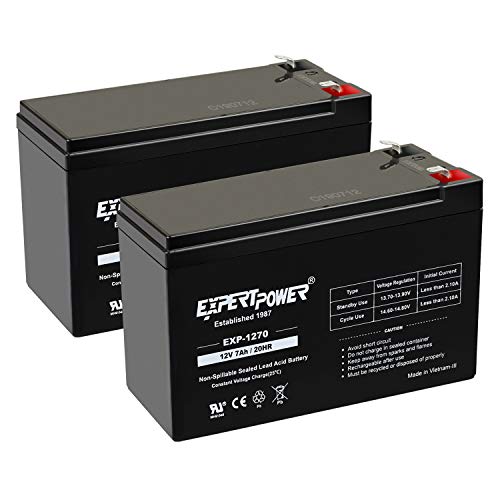 1. ExpertPower EXP1270 12V 7Ah Sealed Lead Acid Battery, 2-Pack | Check price on Amazon | |
 2. Autocessking YTX14AH-BS 12V 12Ah AGM Powersport Battery | Check price on Amazon | |
 3. VEMDIA 12V 100Ah LiFePO4 Lithium Battery, Group 31 | Check price on Amazon | |
 4. VATRER POWER 12.8V 100Ah LiFePO4 Battery with Self-Heating and App Monitoring | Check price on Amazon | |
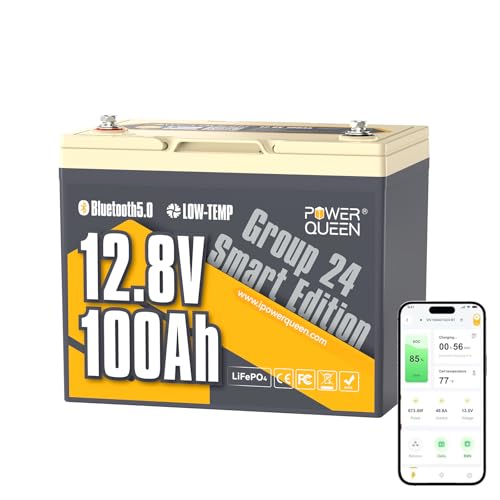 5. Power Queen 12V 100Ah LiFePO4 Lithium Battery | Check price on Amazon |
Key takeaways
- Find the best quality 12V battery for RV, marine, solar, and backup use. Compare five proven picks, from compact SLA packs to long-life lithium.
A good 12 volt battery is one of those purchases that quietly decides whether a weekend trip, a backup system, or a daily routine runs smoothly. The right battery starts an engine without hesitation, keeps lights and small electronics running through an outage, and holds its charge through months of storage. Because 12 volt batteries serve so many different jobs, from powering a trolling motor to backing up a home alarm panel, the meaning of quality changes with the task.
This guide covers five 12 volt batteries for common uses: compact sealed lead acid packs for alarms, ride-on toys, and uninterruptible power supplies, a rugged absorbed glass mat battery for motorcycles and all-terrain vehicles, and three large lithium iron phosphate deep-cycle batteries for recreational vehicles, boats, solar setups, and off-grid power. Read the buying guidance first if you are unsure which chemistry fits, then match the capacity and discharge ratings to the equipment you own.
As an Amazon Associate, we earn from qualifying purchases.
Quick Answer
A 12 volt lithium iron phosphate battery with a management system is the strongest choice for RV, marine, and solar use, delivering far more usable cycles than lead acid at a fraction of the weight. For backup jobs such as alarms and uninterruptible power supplies, a sealed lead acid pack is simpler and cheaper. For motorcycles and ATVs, a sealed AGM battery with strong cranking output is the right tool.
1. ExpertPower EXP1270 12V 7Ah Sealed Lead Acid Battery, 2-Pack
The ExpertPower EXP1270 is a classic small-format 12 volt battery, and this two-pack covers the most common reason people shop for a 12 volt battery: replacing a tired battery in a device that already expects this exact size. The EXP1270 is the standard battery for home alarm panels, uninterruptible power supplies, exit signs, electric feeders, and many ride-on toys. Its sealed lead acid construction means it arrives ready to install, with no acid to add and no venting to arrange, and the F1 terminals match the connectors found on most of the equipment it replaces.
What makes this pack a sensible buy is its breadth of fit. A single model number covers an unusually long list of compatible devices, so owners of older alarm systems, small UPS units, and kids ride-on vehicles can often replace a battery without measuring terminals or hunting for an obscure cross-reference. The sealed design also means the battery can sit in any orientation inside a cabinet or toy chassis, and it tolerates the long standby periods typical of alarm and emergency lighting duty.
There are limits to respect. Seven amp hours is a modest capacity, so this battery is built for low-draw backup duty, not for running lights, fans, or inverters for hours. It is also a lead acid battery, which means it should not be drained flat on a regular basis if you want a long service life. Keep it on a suitable maintainer when it sits idle, and replace it on schedule rather than waiting for the alarm panel to complain.
2. Autocessking YTX14AH-BS 12V 12Ah AGM Powersport Battery
Motorcycle, ATV, and scooter owners need a different kind of 12 volt battery: one that can deliver a strong burst of cranking current on a cold morning, survive vibration on rough trails, and sit unused for weeks without losing its charge. The Autocessking YTX14AH-BS is built for exactly that job. Its absorbed glass mat construction holds the electrolyte in fiberglass separators, so the battery is spill-proof, resists vibration, and needs no maintenance after installation. With a listed cold cranking output of 210 amps, it has the punch to turn over the mid-size engines it is designed to replace.
The YTX14AH-BS size is a widely used powersport format, which makes it a direct replacement for a long list of motorcycles, ATVs, scooters, and snowmobiles that specify this group size. Installation is straightforward: the terminals are in the standard positions, the case dimensions match the factory battery tray, and the sealed design means there is no acid to fill or level to check. Its low self-discharge rate also helps it hold a charge through the off-season better than a conventional flooded battery.
Like every starting battery, this one is optimized for short, powerful bursts rather than long, slow discharge. It is not the right choice for running accessories for hours with the engine off, and it should not be used as a deep-cycle house battery. Pair it with a compatible maintainer during winter storage and it will be ready when riding season returns.
3. VEMDIA 12V 100Ah LiFePO4 Lithium Battery, Group 31
For RV house banks, trolling motors, and solar storage, the VEMDIA 12 volt 100 amp hour lithium iron phosphate battery is the kind of upgrade that changes how a system behaves. It stores 1280 watt hours in a Group 31 case, which means it drops into the battery boxes and trays that already hold a standard Group 31 lead acid battery, while weighing far less than the lead acid unit it replaces. The lithium iron phosphate chemistry delivers a flat voltage curve, so lights stay bright and motors keep their speed until the battery is nearly empty.
A built-in 100 amp battery management system sits at the center of this battery. It guards against overcharge, over-discharge, overcurrent, short circuits, and high temperatures, and it includes a low-temperature charging cutoff that stops charging below freezing. The manufacturer lists a long cycle life stretching into the thousands of cycles at partial depth of discharge, which reflects the fundamental advantage of lithium iron phosphate over lead acid for daily cycling.
The Group 31 footprint is a practical advantage as well. At roughly 12.9 by 6.6 by 8.5 inches, the battery fits standard RV compartments, boat lockers, and battery boxes without modification, and the modest weight makes it far easier to lift into place than a lead acid block of similar capacity. It is designed as an energy storage battery, so it suits house loads, trolling motors, and solar banks rather than engine starting. Buyers should use a charger with a lithium profile and confirm that their inverter and solar controller are set for lithium iron phosphate voltages before the first charge.
4. VATRER POWER 12.8V 100Ah LiFePO4 Battery with Self-Heating and App Monitoring
Cold weather is the weak point of most lithium batteries, and the VATRER POWER 12.8 volt 100 amp hour battery addresses it directly with a self-heating design. When the temperature drops, the battery warms its own cells before accepting a charge, which means a solar bank or RV system can keep working through winter without the owner moving the battery indoors. App monitoring adds convenience: state of charge, voltage, and temperature can be checked from a phone instead of opening a compartment and reaching for a meter.
Beyond the cold-weather features, this is a full-size Group 31 deep-cycle lithium battery with the same core strengths as the other lithium picks in this guide: a large usable capacity, a flat discharge curve, and a built-in management system that protects the cells from the faults that shorten battery life. The self-heating function is the feature that sets it apart for buyers in northern climates, in unheated garages, or on boats stored through the winter.
As with any lithium iron phosphate battery, the charger matters. Use a lithium-compatible charger or set your solar controller and inverter charger to the correct lithium profile, and confirm the battery dimensions against your tray before ordering. The app connection is a monitoring tool, not a substitute for correct system settings, so verify charge voltages and low-voltage disconnect points during installation.
5. Power Queen 12V 100Ah LiFePO4 Lithium Battery
The Power Queen 12 volt 100 amp hour lithium iron phosphate battery rounds out this guide as a straightforward deep-cycle option for RV, marine, and trailer use. It uses the Group 24 format, which is slightly smaller than the Group 31 batteries above, making it a good fit for compartments and trays built around the Group 24 lead acid batteries common in smaller RVs and boats. The lithium iron phosphate chemistry brings the same advantages found across this category: a long cycle life under daily use, a stable voltage output through most of the discharge, and a weight far below a lead acid battery of the same capacity.
A built-in battery management system protects the cells against the common faults that end a battery early, including overcharge, over-discharge, overcurrent, and short circuits. That protection matters most in systems that cycle every day, such as a solar-charged RV bank or a trolling motor setup, where the battery is charged and discharged hundreds of times a year. The Group 24 size also makes this battery easier to place in tight compartments.
Buyers should treat this battery the same way they would any lithium deep-cycle unit: use a lithium-profile charger, confirm the tray dimensions, and check that the inverter and solar controller settings match lithium iron phosphate voltages. It is an energy storage battery, not a starting battery, so it belongs in house banks, trolling motor circuits, and solar storage rather than under the hood of a vehicle.
How to Choose
Start with the job, because the job decides the chemistry. A battery that starts an engine needs high cranking output. A battery that runs a trolling motor, an RV, or a solar bank needs deep-cycle stamina, which means it must survive being drained and recharged hundreds of times. A battery that backs up an alarm panel or a UPS needs to sit at full charge for months and deliver a modest current on demand. Buying a deep-cycle battery for starting duty, or a starting battery for deep-cycle duty, is the most common and most expensive mistake in this category.
Next, match capacity to the load. Amp hours tell you how much energy the battery holds, but usable energy depends on chemistry. A lead acid battery should not be drained fully on a regular basis, so a large part of its rated capacity is effectively off limits for daily cycling. A lithium iron phosphate battery can use nearly all of its rated capacity, which means a 100 amp hour lithium battery can replace a much larger lead acid bank in a cycling application.
Check the physical fit before you order. Group size, terminal position, and terminal type all matter, and a battery that is a fraction of an inch too tall will not close the lid on a battery box. Measure the tray, note the terminal orientation of the battery you are replacing, and compare both against the listing.
Finally, plan the charging side. Lithium iron phosphate batteries need a charger or solar controller with a lithium profile, and the charge voltage must match the battery specification. Lead acid batteries need a charger suited to their type, whether sealed, AGM, or flooded. A charger set for the wrong chemistry will either undercharge the battery and waste capacity or overcharge it and shorten its life.
Who Should Skip It
Not every buyer needs a new 12 volt battery, and some jobs call for a different product entirely. If your vehicle needs a starting battery, skip the deep-cycle lithium batteries in this guide and buy a starting battery rated for your engine size and climate. Deep-cycle batteries are built for slow, steady discharge, and using one to crank an engine can damage the battery and leave you with a slow start on a cold morning.
If your equipment specifies a different voltage, such as 6 volts or 24 volts, none of these 12 volt batteries will work, even with adapters or creative wiring. Match the voltage exactly. Similarly, if your device uses a proprietary battery pack with a built-in connector, a generic 12 volt battery will not fit, and you should buy the manufacturer replacement for that device.
Buyers who need a battery for a critical medical device, a life-safety system, or any application where failure carries serious consequences should follow the equipment manufacturer guidance exactly and consult a qualified technician rather than choosing a battery from a general buying guide.
FAQ
What is the best quality 12V battery for an RV?
For RV house use, a 12 volt 100 amp hour lithium iron phosphate battery with a built-in battery management system is the strongest choice for most owners. It fits standard Group 31 or Group 24 trays, delivers nearly all of its rated capacity on every cycle, and lasts far longer under daily cycling than a lead acid battery of the same size. Use a lithium-profile charger and confirm the tray dimensions before ordering.
How long does a 12V lithium battery last compared with lead acid?
A lithium iron phosphate battery is built for thousands of deep cycles, while a lead acid battery typically delivers a few hundred deep cycles before its capacity fades badly. In a solar or RV system that cycles daily, that difference can mean many years of service from lithium against a few seasons from lead acid.
Can I replace a lead acid 12V battery with a lithium 12V battery?
In many cases yes, provided the physical size and terminal layout match and the charging equipment can be set for lithium iron phosphate voltages. The battery voltage is the same, so most 12 volt loads will work unchanged. The charger is the part that usually needs attention: a charger set for lead acid will not charge a lithium battery correctly. Check the charger settings and the battery manufacturer guidance before making the swap.
What size 12V battery do I need for a trolling motor?
Size the battery from the motor thrust and the hours you plan to run it. A 100 amp hour lithium battery is a common choice for a full day on the water with a mid-size trolling motor, because it delivers its full capacity at a steady voltage and weighs far less than a lead acid battery of the same rating. Check the motor manufacturer guidance for minimum capacity and confirm the battery fits the compartment.
Final Verdict
The best quality 12 volt battery is the one that matches your job, fits your tray, and works with your charger. For small backup duty, the ExpertPower EXP1270 two-pack is a simple, proven replacement that covers alarms, UPS units, and ride-on toys. For motorcycles and ATVs, the Autocessking YTX14AH-BS delivers the cranking output and rugged AGM construction that powersport use demands. For RV, marine, and solar storage, the three lithium iron phosphate batteries in this guide cover the main choices: the VEMDIA Group 31 for a straightforward drop-in upgrade, the VATRER POWER self-heating model for cold climates, and the Power Queen Group 24 for smaller compartments.
Product and ASIN Reference
| Product | ASIN |
|---|---|
| ExpertPower EXP1270 12V 7Ah Sealed Lead Acid Battery, 2-Pack | B00AAZJ9Y8 |
| Autocessking YTX14AH-BS 12V 12Ah AGM Powersport Battery | B0D5H418FB |
| VEMDIA 12V 100Ah LiFePO4 Lithium Battery, Group 31 | B0DV3K31MW |
| VATRER POWER 12.8V 100Ah LiFePO4 Battery with Self-Heating and App Monitoring | B0CNVQXN2J |
| Power Queen 12V 100Ah LiFePO4 Lithium Battery | B0BY8WVM2X |