Our Short List of 3

- Engine: 55.5cc X-Torq two-cycle, 3.5 hp
- Bar and chain: 20 in fitted, accepts 13 to 24 in
- Powerhead weight: 12.8 lb before bar, chain and fuel
- Fuel: two-cycle mix at 50:1

- Engine: 40.9cc X-Torq two-cycle, 2.2 hp
- Bar and chain: 16 in fitted, accepts 13 to 18 in
- Powerhead weight: 9.7 lb before bar, chain and fuel
- Fuel: two-cycle mix at 50:1

- Engine: 60.3cc X-Torq two-cycle, 3.6 hp
- Bar and chain: 24 in fitted, accepts 13 to 24 in
- Powerhead weight: 13.2 lb before bar, chain and fuel
- Fuel: two-cycle mix at 50:1
All 4 Picks at a Glance
| Product | Specs | Action |
|---|---|---|
| Husqvarna 455 Rancher — best overall for felling and bucking |
| Check price on Amazon |
| Husqvarna 435 — best for light felling and small trees |
| Check price on Amazon |
| Husqvarna 460 Rancher — best for large hardwood |
| Check price on Amazon |
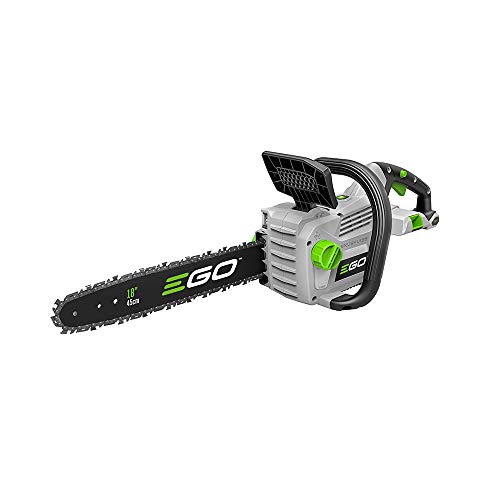 EGO Power+ CS1800 — best battery chainsaw for cutting trees |
| Check price on Amazon |
Key takeaways
- Find the best chainsaw for cutting trees: five picks matched to trunk size, from a light 16-inch felling saw to a 24-inch hardwood model and battery power.
Cutting down a tree is the most demanding job a homeowner chainsaw faces. Felling and bucking ask for a bar long enough to work through the trunk, an engine or motor that holds chain speed under load, and safety hardware that behaves predictably when a cut binds or a trunk shifts. A saw that feels fine on firewood rounds can be badly outmatched by a standing oak, so the picks below are matched to trunk size first and everything else second.
This guide covers five complete chainsaws sized for real tree work: a light 16-inch saw for small trunks and limbing, a 20-inch all-rounder as the top pick, a 24-inch model for large hardwood, a battery saw with genuine felling capacity, and a budget 18-inch gas saw for occasional takedowns. Every pick is a full saw with bar and chain fitted, not a bare powerhead or an accessory.
As an Amazon Associate, we earn from qualifying purchases.
Quick answer
The Husqvarna 455 Rancher is the best chainsaw for cutting trees for most landowners: its 55.5cc engine and 20-inch bar fell and buck trunks up to about 18 inches in a single pass and handle bigger wood with standard two-sided cuts. Smaller properties suit the lighter Husqvarna 435, large hardwood points to the 460 Rancher, and the EGO CS1800 covers felling without fuel mixing.
Husqvarna 455 Rancher — best overall for felling and bucking
- Engine: 55.5cc X-Torq two-cycle, 3.5 hp
- Bar and chain: 20 in fitted, accepts 13 to 24 in
- Powerhead weight: 12.8 lb before bar, chain and fuel
- Fuel: two-cycle mix at 50:1
The 455 Rancher sits in the middle of Husqvarna’s farm and ranch line, and that middle is exactly where most tree work lives. The 55.5cc X-Torq engine produces 3.5 horsepower, enough to keep a 20-inch bar pulling through oak and maple without the bogging that plagues smaller homeowner saws. A 20-inch bar works through trunks of roughly 18 inches in one pass, and the saw accepts bars from 13 to 24 inches, so owners who later meet a bigger tree can fit a longer bar rather than replace the saw.
Daily usability is well thought out. A spring-assisted pull system and air purge bulb make cold firing a short routine, the centrifugal air cleaning system keeps debris away from the filter so power stays consistent through a long bucking session, and rubber isolation mounts cut the vibration that tires arms during limbing. The inertia-activated chain brake, side-mounted chain tensioner and automatic oiler cover the maintenance and safety basics without fuss.
Husqvarna 435 — best for light felling and small trees
- Engine: 40.9cc X-Torq two-cycle, 2.2 hp
- Bar and chain: 16 in fitted, accepts 13 to 18 in
- Powerhead weight: 9.7 lb before bar, chain and fuel
- Fuel: two-cycle mix at 50:1
Not every tree job needs a 20-inch bar. For felling trunks under about 14 inches, clearing saplings, and limbing felled trees, the 435 is the easier saw to live with. Its 40.9cc X-Torq engine makes 2.2 horsepower and drives a 16-inch bar, and the whole powerhead weighs 9.7 lb, roughly three pounds less than the 455 Rancher. That gap is obvious after an hour of limbing, when a lighter saw is still being placed accurately instead of being wrestled.
The 435 shares the family engineering that matters: the same centrifugal air cleaning to protect the filter, anti-vibration mounts, an inertia chain brake, and a spring-assisted pull with an auto-return stop switch that removes the flooded-engine routine beginners dread. It accepts bars from 13 to 18 inches, so fitting an 18-inch bar stretches it to mid-size firewood and the occasional larger takedown, though sustained work in big hardwood is beyond its brief.
Husqvarna 460 Rancher — best for large hardwood
- Engine: 60.3cc X-Torq two-cycle, 3.6 hp
- Bar and chain: 24 in fitted, accepts 13 to 24 in
- Powerhead weight: 13.2 lb before bar, chain and fuel
- Fuel: two-cycle mix at 50:1
When the target is a mature oak, hickory or ash with a trunk past 20 inches, bar length and torque stop being luxuries. The 460 Rancher pairs the largest engine in the Rancher line, a 60.3cc X-Torq unit making 3.6 horsepower, with a 24-inch bar that reaches through big trunks in fewer passes and leaves room for proper felling cuts on wide stumps. The automatic oil pump is adjustable, which matters on long bars where a fixed flow can leave the far end of the chain running dry in dense hardwood.
Despite the step up in capacity, the handling routine stays familiar: spring-assisted pulling, air purge, centrifugal air cleaning and anti-vibration mounts all carry over, and the saw accepts bars from 13 to 24 inches if a shorter setup suits a day of firewood work. At 13.2 lb for the powerhead it is the heaviest saw in this guide, and that weight is the honest trade for the extra reach and grunt. Occasional users felling one large tree a year may find the 455 Rancher sufficient; owners clearing big hardwood regularly will not.
EGO Power+ CS1800 — best battery chainsaw for cutting trees
- Power: 56V brushless motor, EGO ARC Lithium platform
- Bar and chain: 18 in
- Tool weight: 9.7 lb before battery
- Runtime guide: up to 300 cuts per charge with a 5.0Ah battery, per EGO
Battery saws used to top out at pruning duty, but the CS1800 is built around an 18-inch bar and a brushless motor with the chain speed to fell and buck mid-size trunks. EGO rates the saw for up to 300 cuts per charge on a 5.0Ah pack, which translates to a realistic session of felling and sectioning a medium tree without touching a fuel can. For owners already holding EGO 56V batteries for a mower or blower, that runtime is effectively on tap.
The details suit tree work rather than light trimming. Chain tension adjusts with a dial, no tools needed in the field; an LED light helps in shaded woods and at dusk; and the housing is weather resistant, so damp ground and light drizzle do not end the session. This listing is the bare tool, so a battery and charger are bought separately unless the household already runs the platform. The honest limits are bar length, capped at 18 inches, and sustained cutting in large hardwood, where a big gas saw still holds speed better over a long day.
Craftsman S185 — best budget chainsaw for occasional takedowns
The S185 is the value route into genuine tree work: a 42cc full-crank two-cycle engine and an 18-inch low-kickback bar and chain, a combination that fells small to mid-size trees and bucks firewood without the fragility of the mini saws sold for pruning. A spring-assisted pull system reduces the effort needed to fire it, which matters on a tool that may sit in a shed for months between storm cleanups.
An automatic oiler, inertia-activated chain brake and anti-vibration handle design cover the safety and upkeep basics, and the saw weighs a little under 13 lb with its bar and chain fitted, manageable for occasional users. The trade-offs are refinement and headroom: the engine works noticeably harder than the 455 Rancher in hardwood near the bar’s limit, and the fit and finish are workmanlike rather than premium. For a property that drops a few trees a year, that balance is sensible; for weekly cutting, step up to the Rancher models.
- Engine: 42cc full-crank two-cycle
- Bar and chain: 18 in low-kickback
- Weight: a little under 13 lb with bar and chain fitted
- Fuel: two-cycle mix at 40:1
- Key features: spring-assisted pulling, automatic oiler, inertia chain brake, anti-vibration handles
How to choose a chainsaw for cutting trees
Begin with trunk diameter, because it fixes the bar length. A bar should be at least two inches longer than the thickest cut planned in a single pass, so an 18-inch bar handles 16-inch bucking cuts comfortably. Felling allows more reach: with a proper notch and back cut worked from both sides, a saw can fell a trunk approaching twice its bar length, which is why the 20-inch 455 Rancher is a rational ceiling for most properties and the 24-inch 460 Rancher exists for genuinely big hardwood.
Engine size should follow the wood, not ambition. Saws under 45cc, like the 435 and the S185, are happiest in softwood and hardwood up to the middle teens of inches. The 50 to 60cc class holds chain speed in dense oak and hickory and shrugs off long bucking sessions. Above 60cc, power stops being the constraint and weight becomes the cost, so buy that class only when trunk sizes demand it.
Power source is the third decision. Gas saws run as long as fuel lasts and suit remote or all-day work. A strong battery saw like the CS1800 removes fuel mixing, pull firing and exhaust fumes, and it suits properties where trees come down a few at a time near the house; its ceiling is bar length and the number of packs on hand. Whichever route you take, confirm the safety set: an inertia chain brake, a chain catcher, and a throttle lockout are non-negotiable for felling, and chaps, eye and ear protection, and a helmet belong in the same budget.
Who should skip these picks
Anyone whose cutting is limited to pruning, storm twigs and firewood rounds under eight inches should skip this class entirely: a 12 to 14-inch homeowner saw or even a cordless pruning saw is lighter, cheaper and safer to handle, and every saw here would be dead weight. Likewise, if the job is a single very large or awkwardly leaning tree near a house, fence or power line, the correct purchase is not a bigger saw but a tree service; felling direction control near structures is a professional skill, and no bar length compensates for it.
Renters and occasional users with one small takedown a year may also find the budget S185 more ownership than they need, since two-cycle engines dislike long storage and demand fresh fuel and winterising care. A battery saw borrowed against an existing platform, or a rental gas saw for the weekend, can be the smarter route.
Frequently Asked Questions
How big a tree can a 20-inch chainsaw cut down?
A 20-inch bar fells trunks up to about 18 inches in straightforward single-pass cuts, and with a notch and back cut worked from both sides it can bring down trunks approaching 36 to 40 inches across, provided the engine has the power to match. In practice, the 50 to 60cc class is the comfortable pairing for that bar length in hardwood.
Is a battery chainsaw strong enough to fell a tree?
Yes, within limits. A full-size battery saw with an 18-inch bar, such as the EGO CS1800, fells and bucks small to mid-size trees cleanly and is rated by its maker for hundreds of cuts per charge on a large pack. Its ceiling shows in trunks beyond its bar length and in all-day hardwood cutting, where gas saws keep refuelling in a minute and hold chain speed longer.
What is the difference between felling and bucking?
Felling is cutting a standing tree down in a controlled direction, using a notch cut and a back cut, often with wedges. Bucking is cutting the fallen trunk into sections or firewood rounds once it is on the ground. Felling is the higher-risk task and drives the bar length and safety requirements in this guide; bucking is repetitive cross-cutting where engine stamina and chain sharpness matter most.
What safety gear is essential for cutting trees?
At minimum: chainsaw chaps or trousers with fibre protection, a helmet with visor and ear defenders when felling, eye protection, gloves with a firm grip, and steel-toe boots. Add felling wedges and a mallet for directional control on larger trunks, and never fell alone; a second person at a safe distance with a phone is part of the safety setup.
Final verdict
Match the saw to the trunk and the choice makes itself. The Husqvarna 455 Rancher earns the top spot because its 20-inch bar and 55.5cc engine cover the widest range of real felling and bucking work without excess weight. Choose the 435 for small trees and long limbing sessions, the 460 Rancher when big hardwood is the regular job, the EGO CS1800 to fell without fuel mixing, and the Craftsman S185 when the budget leads and the work is occasional. Any of the five will cut trees properly; the wrong size, in either direction, is the only real mistake.
Product and ASIN Reference
| Product | ASIN |
|---|---|
| Husqvarna 455 Rancher 20-Inch Gas Chainsaw | B0C1RKWFSB |
| Husqvarna 435 16-Inch Gas Chainsaw | B0BRNS94P1 |
| Husqvarna 460 Rancher 24-Inch Gas Chainsaw | B0BRNQHRXP |
| EGO Power+ CS1800 18-Inch Cordless Chainsaw (Tool Only) | B08D1Y6Y58 |
| Craftsman S185 42cc 18-Inch Gas Chainsaw | B082G4HWL2 |