Our Short List of 3
All 5 Picks at a Glance
| Product | Specs | Action |
|---|---|---|
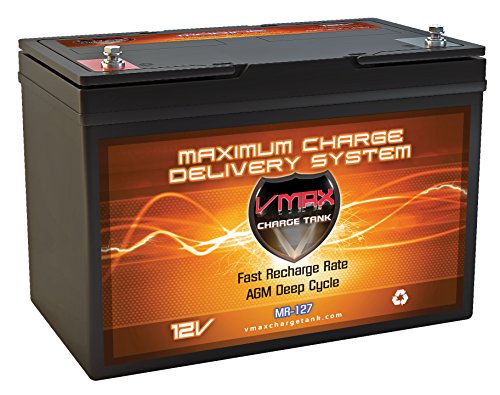 1. VMAX MR127 | Check price on Amazon | |
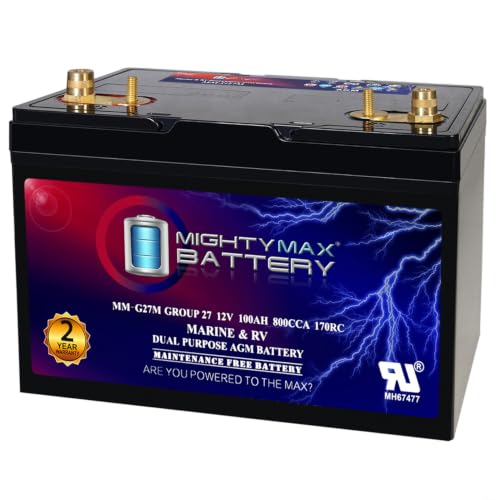 2. Mighty Max MM-G27M | Check price on Amazon | |
 3. Odyssey ODX-AGM27M | Check price on Amazon | |
 4. Marxon Group 27M | Check price on Amazon | |
 5. Odyssey ODP-AGM31M | Check price on Amazon |
Key takeaways
- How long does a marine battery last? Lead-acid types last 2 to 5 years, lithium far longer. See what wears one out and five marine batteries built to last.
Disclosure: As an Amazon Associate, this site may earn from qualifying purchases made through links on this page.
Intro
A marine battery lasts two to five years in most boats when it is a lead-acid type, and the exact number depends on the chemistry, how deeply it is discharged, and how it is charged and stored. A flooded lead-acid marine battery usually gives two to four years of service. A sealed AGM marine battery usually gives three to five years. A lithium iron phosphate marine battery, written as LiFePO4, can give eight to ten years or more, because its chemistry tolerates far more charge cycles than lead-acid. Those figures assume normal weekend use, a proper marine charger, and a battery that is never left flat for weeks at a time.
The short answer hides a useful detail. A marine battery does not die on a fixed calendar. It wears out through cycles, and every deep discharge takes a slice out of its total life. A battery drawn down to half its capacity and recharged promptly lasts far longer than the same battery drawn down to nearly empty and left that way through the winter. The guidance in this article is general knowledge for choosing and caring for a marine battery, not the result of practical bench work, and every specification below comes from the product listing for that battery.
This guide explains the factors that decide how long a marine battery lasts, how to read the numbers that matter on a listing, and how to pick a battery that fits your boat. The five picks below are all sealed AGM marine batteries in Group 27 and Group 31 sizes, the two sizes that cover most boats with a trolling motor, a fish finder, and an outboard engine. Each one states its capacity, cranking figures, and weight on its listing, so you can match it to your battery box before ordering.
At a Glance
- A flooded lead-acid marine battery lasts about two to four years. A sealed AGM marine battery lasts about three to five years. A LiFePO4 marine battery lasts about eight to ten years or more.
- Depth of discharge is the biggest single factor. Shallow discharges and prompt recharging stretch life. Deep discharges and long storage in a flat state shorten it.
- Group size decides fit. Group 27 and Group 31 are the common marine sizes. Measure your battery box before ordering, because a Group 31 case is longer than a Group 27 case.
- Dual-purpose marine batteries combine engine cranking with deep-cycle service. A dedicated deep-cycle battery gives more cycles for a trolling motor but is not built to crank an engine.
- All five picks below are sealed AGM marine batteries. AGM holds the acid in glass mat separators, so the unit is spill-proof and needs no added water.
How to Choose
Begin with the group size. Group size is the industry code for the physical footprint of a battery, and it is the most common reason a good battery will not fit a boat. A Group 27 case measures about 12 inches long, 6.6 inches wide, and 8.2 inches high. A Group 31 case is a little longer, at about 13 inches. Measure the battery box in your boat, including the height under the lid, and check the terminal positions, because a battery that is a fraction of an inch too tall will not sit under the cover. The listings in this guide state the dimensions, so compare them against your box before ordering.
Next, decide between a dual-purpose battery and a dedicated deep-cycle battery. A dual-purpose battery is built to do two jobs: deliver a short burst of high current to crank the engine, and then deliver steady current to run a fish finder, lights, and a trolling motor. A dedicated deep-cycle battery is built for steady discharge over hours, with thicker plates and more cycles, but it is not built to crank an engine. If your boat has one battery, buy dual-purpose.
Capacity comes next, and it is measured in amp-hours, written as Ah. A 100-amp-hour battery can deliver 100 amps for one hour, or 10 amps for ten hours, in theory. In practice a lead-acid battery should not be drawn below half its capacity on a regular basis, so a 100-amp-hour AGM battery gives about 50 amp-hours of routine usable energy. A 92-amp-hour battery gives a little less. Match the capacity to your load: add up the amp draw of your trolling motor, fish finder, and lights, multiply by the hours you run them, and choose a battery with at least twice that figure in rated amp-hours.
Cranking figures matter if the battery must turn an engine over. Cold cranking amps, written as CCA, is the current the battery can deliver for thirty seconds at zero degrees Fahrenheit while holding voltage above a set floor. Marine cranking amps, written as MCA, is the same measure at 32 degrees Fahrenheit, and the MCA figure is always higher than the CCA figure for the same battery. Match or beat the CCA figure in your engine manual. Reserve capacity, written as RC, is the number of minutes a fully charged battery can deliver 25 amps before its voltage falls below a set floor, and a higher RC figure means more run time for your electronics.
Chemistry and construction decide the service life you asked about. AGM batteries hold their acid in glass fibre mats between the plates, so they are sealed and spill-proof, resist vibration better than a flooded battery, and hold their charge well during storage. They still lose capacity with every deep discharge, so recharge promptly after use, never leave the battery flat, and use a charger with an AGM setting.
Finally, look at the warranty the listing states. A two-year warranty is common for marine AGM batteries. Keep the receipt and confirm the return terms before ordering.
The Picks
1. VMAX MR127
VMAX MR127 12 Volt 100Ah AGM Deep Cycle Marine Battery
The VMAX MR127 is a dedicated deep-cycle marine battery, and it is the pick for boats where a trolling motor does the heavy work. The listing states a 12-volt, 100-amp-hour AGM battery in Group 27 size, with a weight of 68 pounds and marine terminals. It is built for 12-volt trolling motors in the 40 to 100 pound thrust range, and it includes carrying handles, which matters when you lift a 68-pound battery in and out of a boat.
The construction is the reason this battery lasts. The listing describes an electrolyte suspension system that holds the acid in high-porosity glass mat, with heavy-duty lead-tin alloy grids that give extra margin in float and cyclic use, even after repeated deep discharges. That is the language of a battery built to be drawn down and recharged again and again, which is exactly how a trolling motor battery is used. It is not a cranking battery, and the listing does not state a CCA figure, so do not buy it to turn an engine over. For a boat with a separate cranking battery and a trolling motor that runs for hours, the MR127 is the most focused deep-cycle pick in this guide.
2. Mighty Max MM-G27M
Mighty Max MM-G27M 12V 100Ah Group 27M Deep Cycle Marine AGM Battery
The Mighty Max MM-G27M is a dual-purpose marine battery, and it is the pick for a boat with one battery that must do everything. The listing states a 12-volt, 100-amp-hour AGM battery in Group 27M size, with 800 cold cranking amps, 850 marine cranking amps, and 170 minutes of reserve capacity. The case measures 12.00 by 6.62 by 8.25 inches, stands 9.43 inches tall including the terminals, and weighs 70.5 pounds. The listing states a two-year limited warranty.
The dual-purpose design is what sets it apart from the VMAX above. The 800-CCA figure is enough to crank most outboard engines, and the 170-minute reserve capacity gives long run time for a fish finder and lights after the engine is off. The listing states up to 700 cycles at half depth of discharge, which is a plain statement of the life rule from the introduction: shallow discharges last longer. Keep this battery above half charge on a regular basis, recharge it promptly after a day on the water, and it will give the three to five years an AGM marine battery is expected to give. Let it sit flat through the winter and that figure falls fast.
3. Odyssey ODX-AGM27M
Odyssey ODX-AGM27M Extreme Series AGM Battery
The Odyssey ODX-AGM27M is the strongest cranking battery in this group, and it is the pick for a boat with a large outboard that needs a hard turn on a cold morning. The listing states a 12-volt AGM battery with 930 cold cranking amps, 1,290 hot cranking amps, and 195 minutes of reserve capacity. The weight is 67.9 pounds. The terminals are SAE lead posts plus stud posts, with the negative terminal on the right side, so check the cable layout in your boat before ordering.
The 930-CCA figure is the highest in this guide, and the 195-minute reserve capacity is the longest, which makes this battery the best fit when one battery must crank a big engine and then run electronics for hours. The service life depends on how it is treated: a battery recharged after every trip and stored at full charge will last years, while a battery left flat will not, whatever the brand on the label.
4. Marxon Group 27M
Marxon Group 27M Marine Battery Dual Purpose 12V 92Ah
The Marxon Group 27M is a dual-purpose marine battery at a lower capacity, and it is the pick for a smaller boat that needs both cranking and house service without the weight of a 100-amp-hour unit. The listing states a 12-volt, 92-amp-hour AGM battery in Group 27M size, with 800 cold cranking amps, 1,040 marine cranking amps, and 175 minutes of reserve capacity. The case measures 12.05 by 6.61 by 8.19 inches. The terminals are arranged with the positive on the left and the negative on the right. The listing states 24 months of replacement cover, with a United States office for support.
The 92-amp-hour capacity is a little below the 100-amp-hour picks above, so the routine usable energy is a little less, about 46 amp-hours at half depth of discharge. That is enough for a small trolling motor, a fish finder, and lights on a day trip, and the 800-CCA figure still cranks most outboards. The listing is plain about the dual-purpose role, and it states the sealed lead-calcium build, with no water to add, which means no water to add during the life of the battery. If your battery box is a Group 27 tray and your loads are modest, the Marxon gives the dual-purpose job at a lower capacity and a lower weight than the 100-amp-hour units.
5. Odyssey ODP-AGM31M
Odyssey ODP-AGM31M Performance Series AGM Battery
The Odyssey ODP-AGM31M is a Group 31 dual-purpose marine battery, and it is the pick for a larger boat with a bigger battery box and bigger loads. The listing states a 12-volt AGM battery with 925 cold cranking amps, 1,325 hot cranking amps, and 190 minutes of reserve capacity. The detail table lists the capacity at 92 amp-hours. The terminals are SAE posts plus 3/8-inch positive and 5/16-inch negative stainless stud terminals, with the negative terminal on the right side.
Group 31 is the step up from Group 27, and the larger case holds more plate area, which is what gives this battery its 925-CCA figure alongside a long reserve capacity. The 92-amp-hour capacity is the same as the Marxon above, so the usable energy is similar, but the cranking output and the reserve capacity are stronger, which suits a boat with a larger engine and more electronics. Measure the battery box first, because a Group 31 case is longer than a Group 27 case and will not fit a tray built for Group 27.
Comparison Table
| Battery | Group Size | Voltage | Capacity | CCA | Reserve Capacity | Weight |
|---|---|---|---|---|---|---|
| VMAX MR127 | Group 27 | 12 volts | 100 Ah | Not stated on listing | Not stated on listing | 68 lb |
| Mighty Max MM-G27M | Group 27M | 12 volts | 100 Ah | 800 | 170 min | 70.5 lb |
| Odyssey ODX-AGM27M | Group 27 | 12 volts | Not stated on listing | 930 | 195 min | 67.9 lb |
| Marxon Group 27M | Group 27M | 12 volts | 92 Ah | 800 | 175 min | Not stated on listing |
| Odyssey ODP-AGM31M | Group 31 | 12 volts | 92 Ah | 925 | 190 min | Not stated on listing |
Which One Fits Your Situation
If your boat has a separate cranking battery and you want the longest life from a trolling motor battery, the VMAX MR127 is the pick. It is a dedicated deep-cycle unit with heavy-duty grids built for repeated discharge and recharge, and it is the only pick here that is not asked to crank an engine.
If your boat has one battery that must do everything, the choice is between the Mighty Max MM-G27M and the Odyssey ODX-AGM27M. The Mighty Max gives 100 amp-hours, 800 CCA, and a two-year warranty at 70.5 pounds. The Odyssey gives stronger cranking at 930 CCA and a longer reserve capacity of 195 minutes at 67.9 pounds, with the capacity figure not stated on its listing. For a large outboard on a cold morning, take the Odyssey. For the most capacity in a Group 27 dual-purpose battery, take the Mighty Max.
If your boat is smaller and your loads are modest, the Marxon Group 27M gives the dual-purpose job at 92 amp-hours and 800 CCA, with 24 months of replacement cover. If your battery box takes a Group 31 case, the Odyssey ODP-AGM31M gives 925 CCA and 190 minutes of reserve capacity in the larger case. Whatever you choose, measure the box, match the group size, and recharge the battery after every trip.
FAQ
How long does a marine battery last?
A flooded lead-acid marine battery lasts about two to four years. A sealed AGM marine battery lasts about three to five years. A lithium iron phosphate marine battery lasts about eight to ten years or more. Those figures assume normal weekend use, a proper marine charger, and a battery that is never left flat for weeks at a time.
What wears a marine battery out the quickest?
Deep discharges left uncharged wear a marine battery out the quickest. A lead-acid battery drawn below half its capacity and left flat for weeks loses capacity permanently, because the plates sulfate. Heat, overcharging, vibration, and corroded terminals add their own damage. Recharge promptly after every trip and store the battery at full charge.
How do I know my marine battery is wearing out?
The signs are slower engine cranking, a fish finder that cuts out under load, a battery that will not hold a charge overnight, and a resting voltage below 12.4 volts after a full charge. A battery that needs charging after every short trip, or one that swells or leaks, is at the end of its life and should be replaced.
Can I use a car battery in a boat?
A car battery will crank an engine, but it is not built for deep-cycle use or for the vibration and moisture of a boat. Car batteries have thinner plates made for short bursts, and repeated deep discharge wears them out fast. A marine battery has thicker plates, stronger cases, and terminals built for the marine environment. Use a marine battery in a boat.
Should I leave my marine battery on the charger all winter?
A smart marine charger with a float or maintenance mode can stay connected, because it holds the battery at full charge without overcharging. A basic charger without an automatic shut-off should not stay connected, because it can overcharge the battery. If you disconnect for the winter, charge the battery fully first, store it in a cool dry place, and top it up every month or two.
Final Take
A marine battery lasts two to five years in lead-acid form, with AGM at the long end of that span and lithium far beyond it, and the number is decided less by the label than by how the battery is used. Shallow discharges, prompt recharging, and full-charge storage stretch a battery toward the long end of its span. Of the five picks here, the VMAX MR127 is the dedicated deep-cycle choice, the Odyssey ODX-AGM27M is the strongest cranking choice, the Mighty Max MM-G27M is the most balanced dual-purpose choice, the Marxon Group 27M is the lighter dual-purpose choice for a smaller boat, and the Odyssey ODP-AGM31M is the strongest all-round choice for a larger boat with a Group 31 box. Measure the box, match the group size, and recharge after every trip.