Our Short List of 3
All 5 Picks at a Glance
| Product | Specs | Action |
|---|---|---|
 1. Redodo 12V 100Ah Dual Purpose Group 27 | Check price on Amazon | |
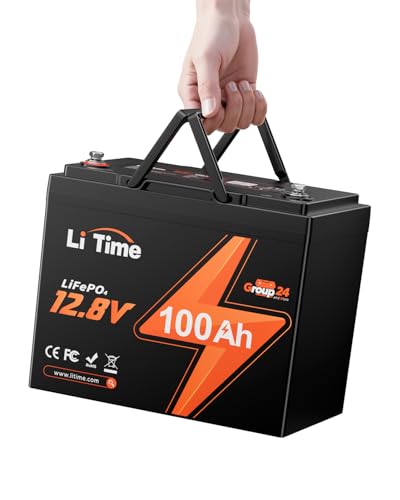 2. LiTime 12V 100Ah Group 24 | Check price on Amazon | |
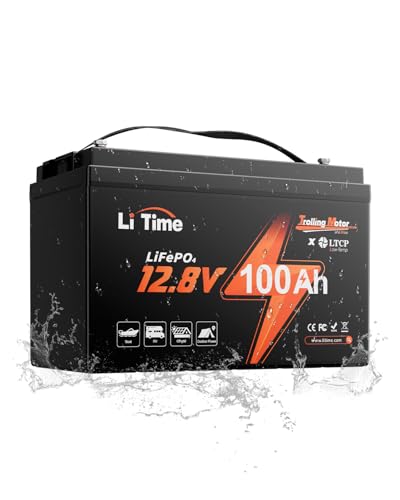 3. LiTime 12V 100Ah Trolling Motor Group 31 | Check price on Amazon | |
 4. ECO-WORTHY 12V 100Ah Bluetooth Group 24 | Check price on Amazon | |
 5. Power Queen 12V 125Ah Bluetooth Group 27 | Check price on Amazon |
Key takeaways
- How many watt hours in a marine battery? A 12-volt 100-amp-hour unit holds about 1,200 watt-hours. See the usable figure by chemistry and five marine picks.
Disclosure: As an Amazon Associate, this site may earn from qualifying purchases made through links on this page.
Intro
A 12-volt, 100-amp-hour marine battery holds about 1,200 watt-hours of energy, and the exact figure comes from a simple multiplication: volts times amp-hours equals watt-hours. A lead-acid battery at 12 volts and 100 amp-hours gives 12 times 100, which is 1,200 watt-hours. A lithium iron phosphate battery, written as LiFePO4, runs at a nominal 12.8 volts, so the same 100 amp-hours gives 12.8 times 100, which is 1,280 watt-hours. A 125-amp-hour lithium battery at 12.8 volts gives 1,600 watt-hours. Those are the rated figures, and the usable figure is a different number, because a lead-acid battery should not be drawn below half its capacity on a regular basis, while a lithium battery can be drawn down almost fully.
The distinction between rated watt-hours and usable watt-hours is the point of this guide. A 1,200-watt-hour lead-acid marine battery gives about 600 watt-hours of routine usable energy, because drawing it below half charge on a regular basis shortens its life. A 1,280-watt-hour lithium marine battery gives close to 1,280 watt-hours of usable energy, because its chemistry tolerates deep discharge. The guidance in this article is general knowledge for choosing a marine battery, not the result of practical bench work, and every specification below comes from the product listing for that battery.
This guide explains how to work out the watt-hours of any marine battery, how chemistry changes the usable figure, and how to size a battery bank for your boat. The five picks below are all lithium iron phosphate marine batteries with a stated watt-hour figure on the listing, so you can compare them on the number that matters instead of guessing from amp-hours alone. Each one is a 12-volt unit in Group 24, Group 27, or Group 31 size, and each one states its capacity, weight, and battery management system on its listing.
At a Glance
- Watt-hours equal volts times amp-hours. A 12-volt, 100-amp-hour battery holds about 1,200 watt-hours. A 12.8-volt, 100-amp-hour lithium battery holds 1,280 watt-hours.
- A 12.8-volt, 125-amp-hour lithium battery holds 1,600 watt-hours, which is 320 watt-hours more than a 100-amp-hour unit in the same case size.
- Usable watt-hours depend on chemistry. A lead-acid battery gives about half its rated watt-hours on a regular basis. A lithium battery gives nearly all of its rated watt-hours.
- To size a battery, add up the watts of everything you run, multiply by the hours you run it, and choose a battery with at least that many usable watt-hours, plus a margin.
- All five picks below are lithium iron phosphate marine batteries with a stated watt-hour figure, a built-in battery management system, and a 12-volt nominal output.
How to Choose
Begin with the arithmetic. Watt-hours measure energy, which is the size of the tank. Watts measure power, which is how fast the tank drains. A trolling motor that draws 30 amps at 12 volts uses 360 watts. Run it for three hours and it uses 1,080 watt-hours. A fish finder that draws 2 amps at 12 volts uses 24 watts, and over eight hours it uses 192 watt-hours. Add up every load on your boat, multiply each one by the hours you run it, and you have the watt-hours you need for a day. Then choose a battery whose usable watt-hours cover that figure with a margin for wind, current, and a longer day than planned.
Next, apply the chemistry correction. A lead-acid battery rated at 1,200 watt-hours gives about 600 usable watt-hours, because it should not be drawn below half its capacity on a regular basis. A lithium battery rated at 1,280 watt-hours gives close to 1,280 usable watt-hours, because its chemistry tolerates deep discharge. If you compare a lead-acid battery and a lithium battery, compare usable watt-hours, not rated amp-hours.
Group size decides fit, as with any marine battery. Group 24 is the smallest of the three sizes here, Group 27 is the middle size, and Group 31 is the largest. Measure your battery box, including the height under the lid, and check the terminal positions before ordering. The listings in this guide state the dimensions, so compare them against your box. A Group 27 lithium battery often weighs about 23 pounds, which is roughly a third of the weight of a lead-acid battery of the same capacity, so a lithium swap also lightens the boat.
Check the battery management system, written as BMS. A lithium marine battery needs a BMS to guard against overcharge, over-discharge, overcurrent, short circuits, and temperature extremes. All five picks below state a 100-amp BMS. Some also state low-temperature charge protection, which stops charging when the cells are below freezing, and self-heating, which warms the cells so charging can begin in cold weather.
Finally, check whether the battery is built for cranking or for deep-cycle service. Most lithium marine batteries are built for deep-cycle service, which means running a trolling motor and electronics for hours. Only some are built to crank an outboard engine, and the listing will state the cranking figure if it is. A battery that states no cranking figure should not be used to turn an engine over. The Redodo pick below states 900 cold cranking amps and is built for both jobs. The other four picks are deep-cycle units, and their listings say so plainly.
The Picks
1. Redodo 12V 100Ah Dual Purpose Group 27
Redodo 12V 100Ah Dual Purpose Group 27 Marine Battery
The Redodo Group 27 is the only pick in this guide built for both cranking and deep-cycle service, and it is the pick for a boat with one battery that must do everything. The listing states a 12.8-volt, 100-amp-hour lithium battery with 1,280 watt-hours of energy, 900 cold cranking amps, and 1,000 marine cranking amps. The case measures 12.13 by 6.69 by 8.31 inches and weighs 23.1 pounds. It has a Bluetooth 5.0 module for monitoring on a phone, a self-heating function, and an IP67 waterproof housing.
The 1,280-watt-hour figure is the headline, and the listing states it plainly, which is why this battery leads the guide. The 900-CCA figure is what makes it a dual-purpose unit rather than a deep-cycle unit: it can turn a fuel-powered outboard engine over and then run the electronics for the rest of the day. The listing also states a reserve mode that holds about one quarter of the energy back for an engine restart, with a forced restart by remote control or by a button on the battery. One limit is worth noting. The listing states that this battery is not compatible with generators that lack a built-in voltage regulator, and it names unregulated outboard motors it does not work with, so check your engine before ordering.
2. LiTime 12V 100Ah Group 24
LiTime 12V 100Ah Group 24 LiFePO4 Battery
The LiTime Group 24 is the smallest and lowest-weight pick in this guide, and it is the pick for a boat with a tight battery box. The listing states a 12-volt, 100-amp-hour lithium iron phosphate battery with 1,280 watt-hours of energy, a 100-amp battery management system, and a weight of 21 pounds in a Group 24 case. The listing states 4,000 or more cycles at full depth of discharge and a ten-year service life.
The 1,280-watt-hour figure matches the Redodo above, because both are 12.8-volt, 100-amp-hour units, and that is the point of the arithmetic in the introduction: same volts, same amp-hours, same watt-hours. The difference is the role. This LiTime battery is a deep-cycle unit, not a cranking unit, and its listing does not state a cranking figure, so it belongs on the house side of a boat with a separate cranking battery, or on a boat with a small electric motor and no engine to turn over. The listing states that it is a third lighter than a Group 24 AGM battery, and that its usable energy is 1,280 watt-hours against about 504 watt-hours for a 70-amp-hour AGM unit drawn to three-fifths of its capacity. That comparison is the usable-energy rule from the introduction, stated in the listing itself.
3. LiTime 12V 100Ah Trolling Motor Group 31
LiTime 12V 100Ah Trolling Motor LiFePO4 Battery Group 31
The LiTime trolling motor battery is the pick for a boat with a Group 31 box and a trolling motor that runs for hours. The listing states a 12.8-volt, 100-amp-hour lithium iron phosphate battery with 1,280 watt-hours of energy, a 100-amp battery management system, and a weight of 22.16 pounds in a standard Group 31 case. It meets the ABYC E-13 standard for lithium batteries on boats, and it has a built-in TVS that shields 12-volt to 36-volt motors from voltage spikes.
The listing states 4,000 or more cycles at full depth of discharge and a ten-year service life, and it states that the battery can be expanded to four in parallel and four in series for a 51.2-volt, 400-amp-hour bank with 20.48 kilowatt-hours of energy. One limit is stated plainly on the listing: this LiTime battery is for energy storage, not for cranking an engine, and it is not for golf carts or jacks. Use it to run a trolling motor and electronics, and keep a separate cranking battery for the engine.
4. ECO-WORTHY 12V 100Ah Bluetooth Group 24
ECO-WORTHY 12V 100Ah LiFePO4 Lithium Battery with Bluetooth
The ECO-WORTHY Group 24 is the pick for a boater who wants to watch the battery from a phone. The listing states a 12.8-volt, 100-amp-hour lithium iron phosphate battery with 1,280 watt-hours of energy, Bluetooth 5.1 monitoring, a 100-amp battery management system, and a weight of 23.15 pounds. The case measures 10.23 by 6.6 by 8.43 inches in Group 24 size. The listing states a three-year warranty.
The Bluetooth monitoring shows voltage, current, and capacity on a phone, which is the practical way to watch watt-hours in use: you see how much energy is left instead of guessing from a voltage reading. The listing states low-temperature cut-off protection that stops charging when the cell temperature falls below minus 7 degrees Celsius, which guards the cells in cold weather. It also states that the battery supports four in parallel and two in series, for up to 10.24 kilowatt-hours in a bank.
5. Power Queen 12V 125Ah Bluetooth Group 27
Power Queen 12V 125Ah Bluetooth LiFePO4 Battery Group 27
The Power Queen 125Ah is the largest energy store in this guide, and it is the pick for a boat that needs the most watt-hours in a single Group 27 case. The listing states a 12.8-volt, 125-amp-hour lithium iron phosphate battery with 1,600 watt-hours of energy, a 100-amp battery management system, Bluetooth 5.0 monitoring, and a weight of 11.39 kilograms. The case measures 12.13 by 6.69 by 8.31 inches in Group 27 size. The listing states a five-year warranty, up to 15,000 cycles, and ABYC E-13 compliance.
The 1,600-watt-hour figure is 320 watt-hours more than a 100-amp-hour unit in the same case size, and the listing states that difference plainly: enough to run a 10-watt light for up to 32 hours longer. The listing states low-temperature protection that stops charging below 32 degrees Fahrenheit and stops discharging below minus 4 degrees Fahrenheit. It also states plainly that this is an energy storage battery, not a starter battery, so use it for house loads and trolling motors, not for cranking an engine.
Comparison Table
| Battery | Group Size | Voltage | Capacity | Watt-Hours | Weight | Cranking |
|---|---|---|---|---|---|---|
| Redodo Group 27 | Group 27 | 12.8 volts | 100 Ah | 1,280 Wh | 23.1 lb | 900 CCA |
| LiTime Group 24 | Group 24 | 12 volts | 100 Ah | 1,280 Wh | 21 lb | Not a cranking battery |
| LiTime Trolling Motor Group 31 | Group 31 | 12.8 volts | 100 Ah | 1,280 Wh | 22.16 lb | Not a cranking battery |
| ECO-WORTHY Bluetooth Group 24 | Group 24 | 12.8 volts | 100 Ah | 1,280 Wh | 23.15 lb | Not a cranking battery |
| Power Queen 125Ah Group 27 | Group 27 | 12.8 volts | 125 Ah | 1,600 Wh | 11.39 kg | Not a starter battery |
Which One Fits Your Situation
If your boat has one battery that must crank the engine and run the electronics, the Redodo Group 27 is the only pick here built for both jobs. It states 1,280 watt-hours and 900 cold cranking amps in one Group 27 case, with self-heating and a reserve mode for an engine restart. Check the engine compatibility note on its listing before ordering, because it does not work with unregulated outboard motors.
If your boat has a separate cranking battery and you want the most usable watt-hours for house loads, the choice is by case size. The LiTime Group 24 fits the smallest box at 21 pounds. The ECO-WORTHY Group 24 fits the same size with Bluetooth monitoring and a three-year warranty. The LiTime trolling motor battery fits a Group 31 box with ABYC E-13 compliance and a built-in TVS for voltage spikes. The Power Queen 125Ah fits a Group 27 box with 1,600 watt-hours, which is the most energy in this guide, plus a five-year warranty and up to 15,000 cycles. Work out your daily watt-hours first, add a margin, and then pick the case size that fits your box.
FAQ
How many watt hours in a marine battery?
A 12-volt, 100-amp-hour marine battery holds about 1,200 watt-hours. A 12.8-volt, 100-amp-hour lithium marine battery holds 1,280 watt-hours. A 12.8-volt, 125-amp-hour lithium marine battery holds 1,600 watt-hours. Multiply volts by amp-hours to get watt-hours for any battery.
How many usable watt-hours does a marine battery give?
A lead-acid marine battery gives about half its rated watt-hours on a regular basis, because it should not be drawn below half its capacity. A lithium marine battery gives nearly all of its rated watt-hours, because its chemistry tolerates deep discharge. A 1,200-watt-hour lead-acid battery gives about 600 usable watt-hours. A 1,280-watt-hour lithium battery gives close to 1,280 usable watt-hours.
How do I work out how many watt-hours my boat needs?
Add up the watts of everything you run, multiply each one by the hours you run it, and add the figures together. A trolling motor drawing 30 amps at 12 volts uses 360 watts, and three hours of use needs 1,080 watt-hours. A fish finder drawing 2 amps at 12 volts uses 24 watts, and eight hours needs 192 watt-hours. Choose a battery whose usable watt-hours cover the total with a margin.
Why do two 100-amp-hour batteries have different watt-hours?
Because watt-hours depend on voltage as well as amp-hours. A 12-volt, 100-amp-hour battery holds 1,200 watt-hours. A 12.8-volt, 100-amp-hour lithium battery holds 1,280 watt-hours. The voltage difference is small, but it changes the energy figure, and the usable figure changes far more, because lithium can be drawn down almost fully while lead-acid should stay above half charge.
Can I mix a lithium marine battery with a lead-acid battery?
Not in the same bank. Lithium and lead-acid batteries charge at different voltages and have different charge curves, so wiring them together in one bank will leave one of them undercharged or overcharged. Use one chemistry per bank, and use a charger with a setting for that chemistry. A boat can carry a lithium house bank and a separate lead-acid cranking battery, as long as each has its own charging path.
Final Take
A marine battery holds as many watt-hours as its volts times its amp-hours: about 1,200 watt-hours for a 12-volt, 100-amp-hour unit, 1,280 watt-hours for a 12.8-volt lithium unit of the same capacity, and 1,600 watt-hours for a 12.8-volt, 125-amp-hour unit. The number that decides a day on the water is the usable figure, and there lithium wins by a wide margin, because it gives nearly all of its rated energy while lead-acid gives about half. Of the five picks here, the Redodo Group 27 is the dual-purpose choice with 900 cranking amps, the LiTime Group 24 is the lowest-weight choice, the LiTime trolling motor battery is the Group 31 choice with ABYC E-13 compliance, the ECO-WORTHY Group 24 is the Bluetooth monitoring choice, and the Power Queen 125Ah is the most energy in a single Group 27 case. Work out your daily watt-hours, add a margin, and match the case to your box.