Key takeaways
- Corded: constant power, no battery to charge, generally lighter on the budget. You are limited by cord length and outlet access, so plan on a heavy-duty extension cord rated for the motor current.
- Cordless: no cord to snag, handy for outdoor work and quick jobs. Runtime falls with load, and grinding is one of the hardest tasks on a battery.
- Reviewers report that cordless grinders have narrowed the performance gap with corded ones, but runtime and cost still favor corded tools for long sessions.
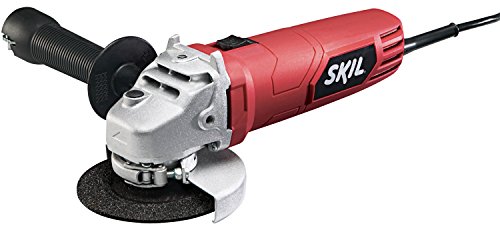
For most households and weekend renovators, a corded 4-1/2 inch grinder such as the DeWalt DWE4012 or the Makita 9557PB is the practical choice under $100, while anyone who already owns Ryobi ONE+ batteries should look at a battery-only Ryobi grinder instead. Corded models give steady power with no runtime limit, which matters when you are cutting tile, trimming rebar or removing rust for more than a few minutes at a time. Cordless grinders are convenient, but at this budget they are usually sold without a battery or charger, so the real cost depends on what you already own.
This guide walks through what the makers state about each current model, how to match a grinder to the jobs around a bathroom, kitchen or workshop, and which safety details deserve attention before you plug anything in. Always read the manual that comes with the tool and follow it over any general advice here.
Our top picks


As an Amazon Associate we earn from qualifying purchases at no extra cost to you.
Angle grinders at a glance
| Model | Power type | Key stated specs | Best for | Limits |
|---|---|---|---|---|
| DeWalt DWE4012 | Corded | 7.5 amp motor, 12,000 RPM, 4-1/2 in wheel, 5/8 in-11 spindle thread, 2-position side handle | General grinding and cutting in tight spots | Smaller motor than the pro-grade DeWalt models |
| DeWalt DWE402 | Corded | 11 amp motor, 11,000 RPM, paddle switch with lock-off, rotating one-touch guard | Frequent or heavy use | Aimed at professional jobsites, so it may stretch the budget |
| Makita 9557PB | Corded | 7.5 amp, 11,000 RPM, 4.5 lb, 10-3/4 in long, paddle switch with lock-on/off | Comfortable grip on longer jobs | No variable speed or bind-up control |
| Ryobi 18V ONE+ grinders | Cordless | Tool-only versions sold without battery or charger | Owners of ONE+ batteries | Runtime depends on the battery you add |
What each model offers
DeWalt DWE4012: the simple corded workhorse
DeWalt lists the DWE4012 with a 7.5 amp AC/DC motor running up to 12,000 RPM. It takes a 4-1/2 inch (115 mm) wheel on a 5/8 in-11 spindle. The maker highlights a one-touch guard that adjusts without tools, a quick-change wheel release, a two-position removable side handle and a low-profile, jam-pot gear case meant for confined spaces. A hex wrench is included in place of the old spanner wrench, so wheel changes need fewer loose parts. The box lists a depressed center wheel, the guard, the wrench and the handle, and the maker states a limited warranty; read its terms for the details.
It is a slim, ergonomic body, which suits people who grind overhead or inside cabinets, vanities and other cramped spots. The trade-off for the lower amperage is that it is built for light-to-moderate work rather than all-day production grinding.
DeWalt DWE402: the step-up option
The DWE402 is a more powerful corded model. DeWalt lists an 11 amp motor at 11,000 RPM with a paddle switch that has a safety lock-off, a one-touch guard that rotates 360 degrees, a quick-change wheel release, a top-mounted spindle lock and a dust ejection system. It is described for professional jobsite use, so treat it as the pick for someone who grinds often and is willing to spend toward the top of the budget range. For a few tile cuts a year, the smaller DWE4012 is more tool than most people need already.
Makita 9557PB: paddle switch comfort
Makita lists the 9557PB with a 7.5 amp motor, 11,000 RPM no-load speed, a 4-1/2 inch wheel, a 5/8 in-11 UNC spindle and a compact 2-1/2 inch barrel. It weighs 4.5 pounds and measures 10-3/4 inches. The extra-large paddle switch has lock-on and lock-off, the side handle can be installed on either side, and an AC/DC switch allows use with alternative power sources. Makita also lists an all-ball-bearing design, a metal gear housing, labyrinth construction to protect the motor and bearings from dust, thicker coil wires to reduce heat loss and a push-button spindle lock.
The grinder has no variable speed dial and no bind-up control, which is normal at this level but worth knowing if you plan to polish or work delicate material.
Ryobi 18V ONE+ grinders: the cordless route
Ryobi sells several 18V ONE+ 4-1/2 inch grinders, and its page for the earlier P4221 model lists the tool as sold without a battery and marks it as discontinued, with newer ONE+ grinders, including brushless HP versions, in the lineup. That detail is the key point for budget shoppers: a cordless grinder under $100 is realistic only if you already own compatible 18V ONE+ batteries and a charger. If you do, a battery-only grinder gives you cord-free reach for fence posts, garden tools and outdoor repairs. If you do not, buying a battery and charger separately will usually push the total past the cap, and a corded grinder is the better value.
Corded or cordless under $100
- Corded: constant power, no battery to charge, generally lighter on the budget. You are limited by cord length and outlet access, so plan on a heavy-duty extension cord rated for the motor current.
- Cordless: no cord to snag, handy for outdoor work and quick jobs. Runtime falls with load, and grinding is one of the hardest tasks on a battery.
- Reviewers report that cordless grinders have narrowed the performance gap with corded ones, but runtime and cost still favor corded tools for long sessions.
Features worth paying attention to
Guard and wheel release
A tool-free guard adjustment means you will actually rotate the guard to keep sparks and debris directed away from you. A quick-change wheel release or included hex wrench shortens accessory swaps, which encourages people to use the right wheel for the job rather than forcing the wrong one.
Switch style
A paddle switch with a lock-off, as listed on the DWE402 and the Makita 9557PB, keeps the tool from starting if it is bumped or picked up carelessly. Slide switches are common on cheaper grinders and can be locked on, which some users find convenient and others find less safe. Match the switch to how you work.
Side handle
Always use the side handle. A two-position handle, or one that installs on either side as on the Makita, helps left-handed users and lets you change grip angle for cutting versus grinding.
Weight and barrel size
The Makita lists 4.5 pounds and a 2-1/2 inch barrel. Barrel diameter affects how the tool feels in your palm, so people with smaller hands may prefer a slimmer body like the DWE4012 described as slim and ergonomic by its maker.
Matching the grinder to the job
- Cutting tile or pipe near a bathroom sink: use an appropriate diamond or abrasive cutting wheel designed for the material and a slim body that fits tight spaces.
- Removing rust and weld spatter: a standard grinding wheel or wire cup brush rated for the grinder speed.
- Cutting bolts and rebar: thin cut-off wheels, with the guard in place.
- Sharpening mower blades and tools: grinding wheel with steady, light pressure.
Never use a wheel or accessory whose maximum speed rating is lower than the grinder no-load RPM printed on the tool. Do not remove the guard, and do not use a cutting wheel for side grinding unless it is designed for it.
Safety notes
- Wear eye protection or a face shield, hearing protection, a dust mask suited to the material and gloves that fit snugly.
- Keep sparks away from flammable materials and clear the work area of rags and solvents.
- Let the wheel reach full speed before touching the work, and keep the tool away from your body when it winds down.
- Inspect wheels before mounting and discard any that are cracked, chipped or damaged.
- Use a grounded outlet and a suitable extension cord for corded tools. If you are unsure about wiring or circuit capacity, ask a qualified electrician.
Pick X if you…
| If you… | Pick | Why |
|---|---|---|
| Want a simple, budget-friendly corded grinder for occasional jobs | DeWalt DWE4012 | Maker lists 7.5 amps, 12,000 RPM, tool-free guard and wheel release |
| Prefer a paddle switch and a comfortable grip | Makita 9557PB | Paddle switch with lock-on/off and a 4.5 lb body |
| Grind often and want more motor | DeWalt DWE402 | 11 amps, lock-off paddle switch, 360-degree guard |
| Already own Ryobi ONE+ batteries | Ryobi 18V ONE+ grinder, tool only | Battery and charger not included, so existing packs keep the cost down |
| Work mostly outdoors away from outlets | Cordless ONE+ model | No cord, but expect runtime limits |
Alternatives to consider
- Other cordless platforms: if you are already invested in a different 18V or 20V system, a bare grinder from that brand may be cheaper in practice than a new platform.
- Oscillating multi-tool: for cutting tile grout or trimming inside tight bathroom corners, a multi-tool may be easier to control than a grinder.
- Hand tools: a hacksaw or a manual tile cutter can be the safer choice for a single small cut.
Care and storage
Wipe dust from the vents after use and keep the tool dry. Store wheels flat in a dry place, away from moisture that can weaken them. Replace worn power cords instead of repairing them with tape, and have brushes checked or replaced according to the manual.
Frequently Asked Questions
Is a corded or cordless angle grinder better for the money?
Corded grinders generally give more sustained power for the money, because there is no battery to buy. Cordless models make sense when you already own compatible batteries or need to work away from outlets. Under this budget, a cordless grinder is usually a bare tool.
What size wheel should I buy?
A 4-1/2 inch grinder is the common size for homeowners, and every model discussed here uses that wheel size. It balances control, weight and a wide supply of accessories. Larger wheels cut deeper but are heavier and are better left for professionals.
Do I need a grinder with variable speed?
Not for general grinding and cutting. Variable speed helps when polishing or working with materials that melt or burn at high speed. The corded models listed here are single-speed, as the makers describe them.
Can I use a grinder to cut tile?
Many people do, using a wheel designed for tile and a steady hand, but it creates a lot of dust. Use an appropriate wheel, wear a dust mask and eye protection, and work outdoors or with ventilation when you can. For a few delicate cuts, a manual tile cutter is often neater.
How do I know when to replace a grinding wheel?
Replace it when it is cracked, chipped, worn down close to the flange or has been dropped. Never use a wheel whose maximum speed is below the tool RPM, and follow the wheel and tool manuals.
What safety gear is essential?
Eye or face protection, hearing protection, gloves and a dust mask suited to the material are the basics, along with a tool guard that stays in place. Sparks and fragments travel farther than people expect, so keep bystanders and flammable items clear.